Tuesday, May 19, 2020

Regarding the Council of Elrond

The Council of Elrond is one of the most important chapters in LotR. Up until then we've gotten vague warnings about the One Ring. This is where we finally find out exactly what is going on and what the characters can do about it. But there's a lot more going on than meets the eye.

Before I can talk about it all I have to digress into the cosmology of Middle Earth and how the rings work.

There are two worlds - the corporal and the incorporeal. Tolkien referred to the incorporeal world as the wraith world. The corporeal world was built by the inhabitants of the wraith world. They are beings of great power known as the valar and lesser but still powerful beings known as the maia. Even after they have taken corporeal form, they still have a presence in the wraith world and they can draw power from it to perform acts that seem like magic.

The most powerful of the elves have been taught by the valar and the maia to also exist in both worlds at once. This is a source of power for them.

At the end of the First Age the elves of Middle Earth were invited to return to the Undying Lands in the West. But the ones who remained were doomed to have their power fade. Tolkien never explained this but my guess is that without the presence of the Valar they would lose their connection to the wraith world.

Enter a being calling himself Annatar. He had discovered a way to infuse a ring with part of one's essence from the wraith world. This meant that the power would never fade.He persuaded  Celebrimbor, the grandson of the greatest elven smith ever and leader of a band of smiths. Celebrimbor saw the rings as a way of preserving the elves power and keeping them from fading. Together they forged 16 rings. Celebrimbor then forged three rings specifically for the elf lords while Annatar forged a special ring for himself. Annatar was really Sauron, a maia of great power and who desired to rule over all of Middle Earth. He infused a great deal of his own power in his ring so that it would allow him to control the other 19 rings and their wearers.

The elves kept their three rings secret but did not destroy them. Sauron seized the rest and gave seven rings to dwarves and nine to kings of men. The drawves used theirs to accumulate treasure. The men used theirs to extend their own kingdoms and lifespans. When wearing the nine rings, the men could transport themselves to the wraith world, becoming invisible to the corporeal world but still able to interact with it. Eventually, all nine of the men became trapped in the wraith world and existed only as invisible beings called ring wraiths or nazgul. Suaron was able to control them through their rings. Even after he took the rings from them they were still his slaves.

The dwarf rings were all destroyed or lost to Sauron. The elf rings were used as intended to extend the elves' power in Middle Earth. At first the three rings were given to Gil-Galad, the high king, Cidan, the lord of the Gray Havens, and Galadriel, queen of Lothlorien. After Gil-Galad was killed his ring was given to Elrond.

After the end of the First Age, the valar abandoned Middle Earth but seven maia came across the ocean to aid the elves and men. They took the form of elderly men and were known as wizards. When Gandalf arrived at the Gray Havens, Cirdan foresaw his needs and gave his ring to Gandalf.

So this is the state of things when Frodo brought the One RIng to Rivendell and Elrond called his council.

We first met Elrond in the Hobbit but he was a bit-player His role was analogous to a non-player character in a computer game. His function is to give the Dwarves some information. In this case, he reads the hidden writing on their map. We are told that he seems to combine all the best properties of men, elves, dwarves and wizards. That's it. We know that Rivendell is in a valley with lots of pine trees and a river at the bottom. That's it.

We learn a lot more about Rivendell in LotR. It is much larger than implied in the Hobbit. We also learn a bit more about Elrond.

The Council itself is where the book really comes together. Previously we've been told that the One RIng must be kept from Sauron but only in general terms. This is where we are finally told the history or the One Ring and some details about the others. We find out who the Nine are.

We find out a little about the three elf rings but not who possesses them. This is interesting because two of them are present at the council. Elrond has one and Gandolf has the second. Both keep their rings secret. Galadriel is the only one who reveals herself to Frodo before the One Ring is destroyed.

We do see the Three in use. Galadriel uses hers when invoking the pool. We don't know for sure but Gandalf probably used his ring for fire magic - either to accomplish it or to augment his own power. In the Hobbit he kills orcs with a thunderbolt and later sets pine cones on fire. In the LotR he uses lightening in a battle against the Ring Wraiths. He started a fire during a blizzard and set a stand of trees on fire during a battle with Wargs. Later he drove the Ring Wraiths away with beams of light.

As for Elrond's ring, presumably that's what gave him the power to flood the ford to RIvendell. We don't know for certain but no other elf ever had control over the water like that.

All three elvish ring-bearers were offered the One Ring at some point. Galadrial admitted that she was tempted but knew she would ultimately be corrupted and refused it. Gandalf also refused it. Elrond was not offered the ring directly but his reaction to it was "I don't care where you take that thing but you can't leave it here."

Note that Elron and Galadriel both offered assistance but were unwilling to give direct aid. Compare this with Gandalf who offered to lead Frodo into Mordor and ultimately gave his life in the process (even if he was resurrected).

Compare Gandalf with Elrond. Elrond complained about the One Ring not being destroyed by Isildur and cast aspersions on all men. But after that he was given one of the Three and spent hundreds of years using its power to nourish Rivendell. This seems a bit hypocritical to complain that the One Ring wasn't destroyed while enjoying power that was only possible because it wasn't destroyed. I've said before that this was a form of original sin by the elves - using the rings to avoid the doom of the Valar that the elves in Middle-Earth would fade and have to return to the lands in the West.

One final point about the Council of Elrond - this is nearly the last point that the LotR is a sequel to The Hobbit. The Council includes the biggest gathering of characters from the Hobbit in LotR and the Fellowship includes one character from the Hobbit (Gandalf) and two members who are the sons of characters from the Hobbit. After this, the book goes on its own course. The only other mention from The Hobbit was the tomb of Balin who was one of the 13 dwarves.

Wednesday, May 13, 2020

The Addams Family - What the Heck Happened?

An animated Addams Family movie came out in 2019. I skipped it in the theater and I'm glad I did. It had very little to do with the traditional characters and was just kind of boring.

The Addams Family began as recurring characters in cartoon drawings by Charles Addams. They were a bazaar set of characters employing black humor. What we think of as the Addams Family came from a 1960s TV adaptation. That's where the names and personalities came from. The Addams family was made into a pair of movies in 1991 and 1993 with some direct-to-video sequels and a brief revival of the TV show using updated versions of the 1990s scripts.

At presented in those versions, the Addams Family was a gentle, living family who make a point of not judging people. They assumed the best of nearly everyone. People might break into their house to rob them and still be greeted with open arms. If the kids wanted to do something that to the Addams's seemed strange and weird (like join the Boy Scouts), they went along with it.

The 2019 version lost all that. In the new version, the family was driven from Europe by ignorant villagers who thought they were monsters. They settled in New Jersey in an run-down mansion overlooking the town of "assimilation" that was being redeveloped into a place of forced conformity. But here's the twist, the Addams Family was presented as just as conformist. The children were miserable because they were expected to follow the family's traditions and values. In the TV show, Morticia wore a Boy Scout bandana to make her son happy. In the movie she had a fit when her daughter wore a colorful hair clip.

In the TV show and the live-action movies the Addams Family was presented as the ideal family once you got past their strange culture. Not so the animated version.

None of the character traits from the TV show or movie were present in the animated movie, either. It's like the writers looked at a few of the cartoons and watched the first movie then decided to ditch everything and write a movie about tolerance involving monsters. Hotel Transylvania did it better as did a bunch of other movies.

Did I mention it was boring?

There were some attempts at humor. They weren't very successful.

When you get down to it, it wasn't really the Addams Family. It was some people who looked like them but were completely different people.

Wednesday, April 15, 2020

LotR - Elves and Original Sin

Tolkien was a devout Catholic. He claimed that Middle Earth was compatible with Christianity but original sin is a huge part of Judaeo/Christian beliefs so where does that fit in? We never find out about men. They awoke in the East and refused to talk about where they came from. There were dark implications but nothing definite.

The elves are a different matter. We know what their sin was. Or sins because they did it twice.

The world was shaped by the Valar and the Maya but Iluvatar created the elves and men (and Valar and Maya) and he decided where and when they would awake.

When the elves first awoke they were innocent. The Valar were overjoyed to find them and invited them to live with the Valar in the Undying Lands in the West in their city of Tuna. Some elves decided to remain in Middle Earth. Some started to follow the Valar but lingered and were left behind. Some made it across the ocean but decided to live on the coast and become ship-builders and sailors. But a substantial number followed the Valar to Tuna.

Then Feanor was born. He was the greatest of the smiths. He created the palantir and other miraculous gems. His greatest creation were three stones called the Silmarils which captured the light from the two trees. That's where the trouble started. Feanor began worrying that someone would steal the stones. At the same time the Valinor felt that he was too possessive of the stones since the light they captured was someone else's creation.

There were also problems between Feanor and his half-brothers. Eventually Feanor was sentenced to life outside of Tuna for a period. It was during this period that Morgoth killed the two trees and stole the Silmarils with the help of a giant spider. They also killed Feanor's father.

Feanor swore to follow Morgoth, avenge his father and recover the Silmarils. He and his seven sons took an unbreakable oath on this, calling on powers to see that they would be tormented if they abandoned their quest. Feanor's brothers agreed to follow him as well as some others like Galadriel who wanted to rule a kingdom of her own.

First they had to get to Middle Earth. Feanor demanded the ships that the elves who lived along the shore had made. They refused and Feanor took them by force, killing some of the elves who resisted.

At this point the god of death who was acting as the messenger for the rest of the Valar appeared to them and told them to return and be forgiven. If they refused they would not be allowed back. Some of them did return, do penance and were accepted back. Most did not and carried on.

And that is the original sin for the elves - leaving the Valar. Nothing they had done until then was unforgivable but when they refused to return they were abandoned and unable to return. The Valar abandoned them with the exception of the sea god who gave them what help he could.

As it turned out, they were no match for Morgoth. They thrived for several centuries while Morgoth built up his forces but eventually he overran Middle Earth except for some scattered groups.

Eventually they were redeemed by the sacrifice of Earendil. His father was human and his mother was an elf. He married Elwing who also had mixed parentage (one of her grandfathers was human and one of her great-grandmothers was a maya who took the form of a female elf). Wearing a Silmaril that Elwing's grandparents had stolen from Morgoth, Earendil penetrated the storms and currents that had kept all other mariners from reaching the Undying Lands. He went before the Valar and asked for their mercy. They granted it and overthrew Morgoth but Earendil was not allowed to return to Middle Earth. Instead he was to sail the heavens with the Silmaril showing as a star.

After Morgoth was overthrown, the Valar told the elves that all was forgiven and they could return to Valinor, he Undying Lands. Here's the second sin. Many elves refused to return. They preferred to remain in Middle Earth. They were cursed that life in Middle Earth would grow tedious and they would eventually long to return to live with the Valar.

In both cases, the elves were punished for refusing to live with the Valar. That was the sin. The Valar were God's (Iluvatar's) instruments on earth and, by refusing to live under their rule, the elves were rejecting Iluvatar.

Here's where Sauron and the rings enter the picture. The elves didn't want to leave Middle Earth but they knew their power would fade and they would eventually be forced to. Enter a disguised Sauron who had a way of capturing some's power in a ring so it would be preserved. He convinced the elf-lord Celebrimbor to help him. Celebrimbor and some assistants forged the Three rings but then they learned that Sauron would be able to rule them through the rings so they hid them until Sauron was defeated and presumed dead.

After Sauron was gone the elves used the rings to preserve their power. The three great elf-kingdoms were Lothlorien, Rivendell and the Grey Havens were all protected and maintained by the rings.

That left the elves with a terrible problem when Sauron and the One Ring reappeared. By that point the elves (and later Gandalf had been using the rings for centuries. It was established that men who wore rings of power too long were under Sauron's control, even after the rings were taken from them. That might have been true for the elves, also.

The elves had spent an age defying the wishes of the Valar that they return to the West. A sacrifice was needed to redeem them. And this sacrifice turned out to be Frodo.

There are several character arcs in LotR but the main one is the sacrifice of Frodo. He starts the story content in his life until Gandalf tells him what the ring really is. From there it's one trial after another for Frodo. The journey starts pleasantly enough with nothing worse than a marsh and tiny bugs to worry them but Frodo is wounded before they get to Rivendell and his journey after that is excruciating (in the book it takes days and Frodo's only escape from the constant pain is when he passes out).

As the journey progresses Frodo realizes that he can no longer trust his companions nor can he lead them into certain death (except Sam who refuses to leave). The RIng becomes heavier the closer they get to Mordor and it dominates Frodo's dreams. By the time they reach Mordor proper, Frodo has been wounded again and can barely drag himself along. He's given up all hope of return and only hopes to live long enough to accomplish his mission.

And then, after all that, he fails. Frodo claims the ring for himself and it is only destroyed by an accident.

Frodo's mission is accomplished and he's saved. But he wasn't really. Frodo took the sins of Middle Earth on himself and could not stay. Like the elves, there was no comfort for him in the world and he had to go with them to the Undying Lands.

And, after Frodo's sacrifice, the elves finally submitted to the Valar and returned to Valinor.

Sunday, April 12, 2020

Some Meditations on Lord of the Rings - Part 1

It's been almost exactly 49 years since I first read the Lord of the Rings. I've reread it several times since then including last year. I've lost track of how many times I've seen all or part of the movies. I recently watched a couple of Youtube videos examining the LotR movies and the Hobbit. And I saw the last part of The Return of the King. I also saw an exhibition of Tolkien's art and I've reread the Silmarilian, Beren and Luthian and The Fall of Gondolin in the last couple of years. All of that left me in the mood to write some thoughts about the books.

The book started as a sequel to The Hobbit but it morphed into a sequel to the Silmarilian. That gave it a lot of texture. Characters were constantly referring to events in the Silmarilian. This made Middle Earth seem like a real place with an established history that everyone knew.

For those who never read the Silmarilian, here's a thumbnail version:

When the world was created there was a division between the Valar. Morgoth, the most powerful of them, wanted to rule them all but the Valar followed Illuvitar, the being who created them all plus elves, men and dwarves. Both sides were assisted by the Maya, supernatural creatures of great power but not as powerful as the Valar. The wizards were maya as were Sauron and the balrogs.

The Valar lived in the undying lands - a continent to the west. Morgoth lived in Angband, a fortress in the northern part of Middle Earth.

The world was dark when the elves first woke in Middle Earth. The only light was starlight and they continue to sing praises for the Valar who created the stars (Elbereth).

The Valar invited the elves to live with them in the undying lands. They also took Morgoth prisoner for years until he convinced them that he had reformed.

One of the Valar created two glowing trees to light the world. The White Tree of Gondor is descended from these.

Feanor, the greatest of the elf craftsmen was born in the undying lands. He created the palantir and several other things before his greatest creation: the silmarils. These were three stones that captured the mingled light of the glowing trees.

With the help of a giant spider (the mother of all the giant spiders in the Hobbit and LotR) Morgoth killed the trees, stole the silmarils and returned to his fortress of Angband.

Feanor and his seven sone swore a powerful oath to follow Morgoth and recover the stones. They were accompanied by his two half-brothers and thousands of followers including Galadrial.

The Valar could not save the glowing trees but they managed to coax a single leaf from each of them. These became the sun and the moon and are pulled across the sky by a pair of maya.

Feanor was killed soon after the elves returned to Middle Earth. The elves found that Angband was too powerful then to conquer but the elves joined with the ones who had remained in Middle Earth and kept Morgoth's forces contained in Angband for centuries. During this time the first men migrated from the east. Many took service under elf kings.

After hundreds of years Morgoth's forces attacked in the Battle of Unnumbered Tears. The forces of elves and men suffered huge losses and most of Middle Earth was overrun.

Beren was the son of one of the leaders of men. He, his father and a small band escaped the battle but were hunted down and eventually Beren was the only survivor. Beren made his way into the realm of Thingol, the High Kind of Middle Earth and fell in love with Thingol's daughter, Luthian. Thingol did not want his daughter to marry a human so he gave him an impossible task - to steal a silmaril from Morgoth's crown.

Beren accepted the task and left for Angband. Luthien followed after him and, after several obstacles, they used stealth and magic to cut one of the stones from Morgoth's crown. During their escape a giant wolf attacked them. Weaponless, Beren held the silmaril in front of him, hoping the wolf would shy away from the light. Instead the wolf bit off Beren's hand and swallowed it and the silmaril.

Luthian and Beren returned to Thingol and Beren proclaimed that he had a silmaril in his hand and held up his arm to prove it. Thingol accepted Beren but shortly afterwards the wolf began ravaging Thingol's kingdom. They led a party to kill it but Beren was wounded and died shortly after the wolf did.

Luthian died of sorrow and convinced the god of death to return Beren to her. The Valor agreed provided Luthian become mortal. They were restored to life and lived separately for a few decades. Before they died they had a son named Dior.

With the death of Beren and Luthian, Thingol received the silmaril. He had it set in a jeweled necklace but the dwarves who did the work killed him and stole the necklace. Dior slew them and ruled as king for a while but the kingdom was overrun by Morgoth's forces and he was killed. His daughter, Elwing was taken to the coast by the survivors along with the silmaril.

The last elf kingdom to fall was Gondolin. It was hidden and the inhabitants thought that even if Morgoth discovered them, he could never conquer them.

The sea god sent a messenger, a man named Tuor, to tell the people of Gondolin to march from their city, gather the other elves and attack Morgoth . They refused but allowed Tuor to live with them and to marry Idril, the king's daughter. They had a child named Earendil.

While Earendil was still a child, Morgoth learned of Gondolin's existence and attacked it with overwhelming forces. Tuor led the survivors to the coast where the joined the other survivors.

Tuor and built a ship and sailed to the west with Idril. No one knows what happened to them but it's rumored that he was allowed to join the elves.

Their son Earendil became a great mariner. He married Elwing and they had two sons, Elrond and Elros. After many attempts to reach the west, Earendil finally succeeded with Elwing accompanying him and the silmaril tied to his brow. He reached the undying lands and convinced the Valar to help he people of Middle Earth.

There was a great battle Morgoth was captured and expelled from the world. Angband was destroyed but some of Morgoth's creatures were overlooked. The remaining two silmarils were lost.

It was ruled that Earendil would not be allowed to return to Middle Earth. Instead his ship could sail the heavens. The "star" that is mentioned several times in LotR is actually the silmaril he still wore. His sons Elrond and Elros were given the choice to live as elf or man. Elrond chose to be elf and Elros to be a man.

The humans who had been faithful to the elves were given a large island named Numenor to live on. On a clear day the undying lands could be seen from it. Elros was their king. Aragorn was distantly descended from Elros. The Numenorians were given a descendant of one of the glowing trees and it became the symbol of the kingdom.

As the centuries passed, the Numenorians became obsessed with death and convinced that the elves and Valar were keeping the secret of immortality from them.

Sauron gathered the remnants of Morgoth's forces and made his own fortress in Mordor. Eventually he tried to conquer Middle Earth but the Numenorians opposed him. Surprised by how strong they were, he surrendered and offered himself as hostage. He appeared to have reformed but actually he was corrupting them. Eventually he convinced them that they were powerful enough to conquer the Undying Lands and take the secret of immortality.

The Valor didn't take kindly to the invasion. Not only did they destroy the fleet, they also destroyed Numenor. Sauron was crushed when the island sank and could never again take a pleasing shape.

A few faithful escaped the destruction of Numernor. This is referred to in LotR in a poem recited by Gandolf:

Tall ships and tall kings
Three times three,
What brought they from the foundered land
Over the flowing sea?
Seven stars and seven stones
And one white tree.

The seven stars were the constellation of the Sickle - a constellation meant as a warning to Morgoth.

The Numernoreans had already established their rule over a large portion of Middle Earth. This group took control of that. They were led by Elendil, and his sons Isildur and Anárion.

That's enough for now. In my next installment I'll talk about how all of this relates to LotR.

Friday, February 21, 2020

Birds of Prey - What Happened?

Birds of Prey had a disastrous opening weekend. While it was #1 it only took in 60% of what it was expected to bring in ($30 million instead of $50 million). That's the lowest opening of a DC or Marvel movie. So what happened?

The trailers were a big, big problem. There were two official trailers. Here's the first, and the second. Watch them then, based only on what you saw in the trailers, tell me who the Birds of Prey are? What are their names. Do they have any powers. How many are there? Is this a superheros take down a bad guy movie or a heist movie?

If you are honest you can't answer any of those questions. All you know is that Harley Freak'n Quinn is in it, that she broke up with the Joker and got some allies to fight a bad guy who is after her some some reason. Plus there's some fight scenes and some singing.

So if your trailer isn't going to explain who the Birds of Prey are then why name the movie after them? DC realized that a few days after the movie opened and relabeled the movie "Harley Quinn:Birds of Prey".

From the trailer I assumed that Harley allied herself with a girl-gang of thieves or something. I was amazed when I read a review that said the Birds of Prey were good girls. Yes, I'm aware of the comic book and I watched the short-lived TV series but I thought they'd reused the name for different characters.

So that's problem number one and it's a big one.

Problem number two: Harley is a spin-off character. In fact she's a spin-off of a spin-off since she was created as the Joker's side-kick in Batman the Animated Series. It was only later that she made the jump to comic books. In the DCU she's a spin-off of Suicide Squad. Yes, when that movie came out she was considered the break-out star but, let's face it, Suicide Squad hasn't aged well. Now that Wonder Woman, Aquaman and Shazam showed that the SCU can have good movies, who needs a spin-off from one of their worst efforts? That was going to make the movie a tough sell regardless. It would have been better to hold the movie until the James Gunn Suicide Squad sequel comes out and, presumably, generates some good will for the characters.

Problem number three: It's rated R. A few comic book movies have been rated R and done well: Joker, Logan and Deadpool all made a ton of money with an R rating. But these were different. They were aimed at a different audience, particularly Joker which was separate from the comic books and Logan which was trying for a gritty, realistic feel. Birds of Prey is being marketed as an action film but it's lead character started out in a cartoon.

Quick, name one R-rated action movie about a bunch of girls with gratuitous violence. There have been a few in this category but they were flops.

This one is personal to me. I considered seeing it and skipped it because of the rating. Eventually I'll see it on TV where the violence will be cut back.

So, there's three reasons that BIrds of Prey failed to live up to expectations. You notice that none of these involved fanboys who can't stand to see strong women or any other reaction against the movie's wokeness. The movies was badly timed, the trailers didn't sell it and the R rating killed it. No other explanations are needed.

Sunday, January 26, 2020

Cats, the Disaster

A few weeks after it was released, Cats is projected to be one of the biggest box office disasters of all time. What happened?

The biggest problem was the CGI. This was a huge mistake for several reasons. A significant amount of the brain is devoted to recognizing faces and interpreting expressions. When the face doesn't register properly it triggers signals that something is wrong. The closer you get to human features without getting them perfect the more it seems wrong. This is known as the Uncanny Valley and it's not a good place to set a movie. Cats removed the actors' ears and replaced them with animated cat ears on top of the head. That just screams wrong.

The stage production used makeup to achieve the cat look. Granted the costumes looked dated by the end of the 1980s, but the concept worked because you knew there was a human head under the makeup.

CGI isn't cheap, either. Probably a good bit of the movie's $95 million budget went for CGI.

But even if they had used actors in makeup instead of CGI, the movie would have been difficult to watch because of the next problem - it looks terrible. Go back and look at successful musicals, especially ones with a lot of dancing. They have long cuts and wide camera angles. Cats is very, very choppy with cuts every 2-4 seconds, often changing from a close-up on someone's feet to a head shot or something else jarringly different. The camera angles are also weird, looking up at the dancers. Possibly this was done to show the sets towering over them and give a sense of scale but it's backwards from how that usually works.
Regardless, fast cuts may be good for music videos but they are the wrong way to do a lavish musical with complicated dance numbers.Combine the quick cuts, the camera angles and the rest and you have a visual mess.

Then there's the stars. Casting a bunch of big-name stars only to cover them in make-up and CGI is self-defeating. I doubt that the star appeal added enough to the box office to pay the extra salaries.

And speaking of stars, there's Taylor Swift. The stage production is really a bunch of poems set to music and strung together with only the slightest suggestion of a plot. The movie tries to make the plot stronger by having Taylor Swift acting as a witness to the gathering of the cats. This was a mistake. She's almost unrecognizable and she's intrusive. The movie constantly cuts to her wide-eyed face. She's supposed to be a surrogate for the audience but she ends up being a distraction. The movie can't just show us the different cats, it also has to show us how she reacts to them. That makes the choppy editing even more distracting. In the stage production whichever cat is being presented takes center stage and the cat chorus simply becomes supporting players. As a narrative device, inserting Taylor Swift is a total failure.

Friday, September 27, 2019

Captain Marvel, Wonder Woman and The Feminist Journey

The Hero's Journey has been a staple of heroic literature dating back to when sagas were sung instead of written. Some modern examples include both The Hobbit and The Lord of the Rings and the original Star Wars movie (which I refuse to call by it's revised name). In the classic hero's journey, the hero, who is often young and inexperienced, is forced to leave his comfortable life behind and undertake a quest. Along the way he meets a mentor who teaches him. Eventually the hero and the mentor are separated and the hero has to use his new knowledge to complete the journey.

In Tolkien's novels, Gandolf sends Bilbo then Frodo on journeys. He accompanies them for a while but in the Hobbit he has to leave to go join the fight against the Necromancer (Sauron). In LotR he is killed (although he recovers). For a while Strider replaces Gandolf as Frodo's mentor but, this being a more adult book, Frodo realizes that he has to leave his companions behind. In Star Wars, Obi-wan saves Luke and whisks him off on a quest. Along the way he gives Luke a bit of training before Darth Vader turns him into a Force Ghost.

The MCU has their own version of the Hero's Journey. Let's call it the Super-Hero's Journey. It's not used in every MCU movie but it's pretty common. The biggest difference is that instead of being young and inexperienced, the hero is flawed. Instead of being forced on a journey by external events, it's the hero's own faults that leads to the journey. The role of the mentor is reduced greatly. Instead of losing his mentor, the hero hits bottom before overcoming his flaws and learning from his experiences to overcome the villain.

Iron Man, the first MCU movie, is also the prototype for the Superhero's journey. Stark hits bottom fast. One minute he's a spoiled millionaire industrialist and the next he's being held hostage in a cave and forced to lug a car battery around or he will die. He has a mentor in the cave who dies pretty fast. He also has a father-figure who betrays him. I'll come back to this later.

In Iron Man 2, Stark is on a self-destructive path, eventually getting a a drunken brawl with Rhodey before Fury sets him on the proper path. In the third movie he's obscessed with making armor and suffering from PTSD after the Avengers movie and loses his home and armor before he once again pulls himself together.

Doctor Strange goes from talented neurosurgeon to bum before the Ancient One trains him to become the Sorcerer Supreme. Thor loses his hammer and his powers until he discovers self-sacrifice. Spider-Man screws up constantly until Stark takes back his Spider-Suit then finally gets his act together.

The Black Panther is a special case. He hit bottom as hard as anyone but he's not flawed. His problems are external. His father and his mentor lied to him. This is an important point. I'll come back to it later.

So, lots of MCU movies have the Hero's Journey. Even the DCU does it with Aquaman. But both Marvel and DC have a different journey for their women. I'll call it the Feminist Journey.

A huge pint is that the heroine is not flawed so there's no need to hit bottom. The Feminist Journey is always up.

The second point is that the heroine is much more powerful than she thinks but she has a mother figure holding her back (echos of the Black Panther's father lying to him).

Finally, the heroine seems to have a mentor but he's actually her enemy.

At the beginning of Wonder Woman, Diana's mother forbid her to even train as an Amazon. Eventually her mother relents with the instruction that Dianna is to be pushed harder than anyone. She's been told that she began as a statue that the gods brought to life and that the armory has a special sword and shield to be used to fight Aries, the God of War. After learning about The Great War, Dianna takes the sword and shield and leaves to go find Aries and stop the war. Near the end of the movie we discover that her mother lied to her. She is a demi-god, the daughter of Zeus and she is the weapon against Aries, not the sword. And, Aries is not the evil German general. He's the kindly English lord who's been helping her.

In Captain Marvel, Carol is a soldier fighting for the Kree. She is trained by Yon-Rogg, her commander and mentor. The Kree are ruled by the Supreme Intelligence who appears to Carol as a mother-figure and constantly warns her about controlling her powers. During the course of the movie she discovers that she is much more powerful than she thought and that she's fighting on the wrong side. She's been told that the Skrulls are terrorists but they are just innocent victims. She discovers that her real enemy is Yon-Rogg.

So the only two superhero movies featuring a woman have the Feminist Journey. But this raises the huge question, why was Wonder Woman such a better movie? The answer is that the Feminist Journey was the A plot in Captain Marvel but it was only the B plot in Wonder Woman. The A plot in Wonder Woman was stopping the German general from using nerve gas on the English and extending the war. The final denouement and CGI battle at the end almost seemed tacked on. In contrast, Captain Marvel put it's Feminist Journey front and center.

The biggest problem with the Feminist Journey is that flawless heroes (or heroines) are kind of boring. Its the flaws that make the heroes interesting.

Monday, August 26, 2019

Why Stark Had to Die

Spoilers ahead for Avengers:Endgame, but you probably heard about this part anyway.

At the climax of Avengers: Endgame, Thanos raised hand, announces, "I am inevitable" and snaps his fingers, intending to remove half of all life in the universe and all memory of what is missing. Nothing happens. Then Tony Stark raises his hand, showing that he took the Infinity Stones while Thanos was distracted. Stark says, "I am Iron Man" and snaps his fingers, causing Thanos and his minions to go to dust. But the effort of using the Infinity Gauntlet was too much and Stark died.

Since then, fans have been saying, "But he didn't have to die, he could have just...". They are all wrong. We know they are wrong Doctor Strange told us so. He used the time stone to look at possible outcomes and the Avengers only won in a single one of them. So, sorry guys, whatever your theory is, it didn't work.

Understand just how powerful Thanos was and how skilfull a fighter he could be. In Avengers: Infinity War he beat the Hulk without drawing strength from the power stone. That's in keeping with the comics where he defeated Thor and the Thing with little effort. He was also inventive. He punched Captain Marvel in the head with no effect (showing how over-powered she is). Without missing a beat, he pulled the power stone from the Gauntlet and used it to blast her. As Thanos said, he was inevitable. Any resolution short of killing him would only be temporary and even decapitation didn't stop a younger version of Thanos from appearing to claim the Gauntlet.

"But Stark didn't have to do a full finger-snap!" Could Stark have done something less and survived? Probably not. The finger-snap represented using the Gauntlet to alter reality. It doesn't matter if you killed half of all life or just ordered a turkey sandwich, you still altered reality. When Thanos used the stones to destroy themselves it released an energy blast comparable to when he dusted half of all life, even though it was a much more localized event. Think of the Gauntlet as a genie granting three wishes.

And that ignores the cost of just putting the Gauntlet on. Every time Thanos added a stone you could see him wince. He did it again when he put the Nano Gauntlet on and when he replaced the power stone after blasting Captain Marvel. Compare that to what happened when the Hulk put the Gauntlet on. His arm was burnt up to his neck and he collapsed. And that was just from wearing it. The finger snap broke his arm. We'd been told that the Gauntlet was generating a lot of radiation, particularly in the gamma range. In the comics the Hulk practically feeds on gamma waves. In the MCU, he still felt that he'd have some sort of immunity. So trying to use the Gauntlet is death to a regular person.

"Wouldn't Stark's armor protect him from the radiation?" This is a pretty dumb question but I've still seen it. We already saw that the Hulk was horribly burnt using a Gauntlet that Stark made especially for the stones. Do you really thing that his nano-suit could improvise something more protective on-the-fly? No, Stark received a lethal dose of radiation as soon as he assembled the Gauntlet. It was hidden by his armor but you could see it on his face.

One final thought, part-way through the fight Stark asked Doctor Strange if this was the one probability where they win? Strange refused to say because telling Stark would change the outcome. That's probably because if he knew they were going to win, Stark would get over-confident and try to avoid his inevitable death. But later, moments before Stark stole the stones from Thanos, Strange held up one finger indicating that this was the one reality where they won. Stark needed that confirmation. He must have known that wearing the Gauntlet would kill him and he needed to know that his sacrifice wasn't in vain.

Friday, May 03, 2019

Avengers: Endgame - the capstone to the MCU

I'm writing this a week after Avengers:Endgame was released. Since it smashed all box office records, I'm going to assume than anyone who stumbles across this blog has seen the movie and doesn't care about spoiler. You've been warned.

I'm not going to talk about Easter eggs or call-backs. I'm going to talk about the character arcs of the last 11 years and how this movie resolves them for the six original Avengers. This is a much more personal movie than Avengers: Infinity War. Until the final fight it really features just the six original Avengers plus Ant-Man, Rocket and Nebula plus Captain Marvel who is more of a cameo than a real presence.

The original crew can be divided into the big three and the rest. The big three, Iron Man, Thor and Captain America, have all had three solo movies plus the four Avengers movies. We got to know all three and we can appreciate the closure that Endgame provided for them.

First is Iron Man, Tony Stark. The key to his character is daddy issues. In the first Iron Man movie we see that he inherited Stark Industries from his father. His father's partner became a surrogate father for Tony but then betrayed him. In the second Iron Man movie, we actually meet his father. Tony has recreated his father's Stark Expo (modeled on the 1964-5 New York World's Fair). The plot concerns Tony's attempt to understand a message his father left for him. In the third Iron Man movie and in Spider-Man Homecoming, Tony acts as a surrogate father for lonely teenagers. In Captain America: Civil War, he creates a technology to relive and change memories just so he can say goodbye to his father.

In Endgame, Tony gets to do this for real. He travels back to 1970 and meets his father and gives him the hug he's wanted to give him for 30-odd years. He also proves that he can be a better father than his father was.

Thor's character is all about failure and trying to live up to impossible expectations. In the first Thor movie his father essentially disowns him and he nearly kills himself trying to prove that he's worthy. In the second movie his mother is killed and his brother, Loki, appears to have been killed. After seeing a vision of Ragnarok in the second Avengers movie, he spends years trying to prevent it. He appears to have succeeded at the beginning of the third Thor movie but then things go very wrong. His father dies, a sister he didn't know about appears and destroys his hammer. He's beaten in an arena by the Hulk. When he finally escapes he realizes that he has to bring Ragnarok about himself in order to save the people of Asgard. He manages to evacuate them in a pair of space ships only to be attacked by Thanos where Loki is killed (again) and half of the surviving Asgardians are killed. Thor devotes himself to getting a weapon capable of killing Thanos. In the process he undergoes great pain and suffering, nearly dying. He finally appears in the nick of time only to fail because he wanted Thanos to gloat so he didn't kill Thanos immediately.

In Endgame, Thor is a drunken couch potato, wallowing in his own failure. He's already had a chance to say his goodbyes to his father (in a vision) but he talks to his mother who tells him that it's alright to fail. He's also able to call his hammer, proving that he's still worthy, even after his failures. By the end of Endgame he's got his confidence back and is ready to go adventuring again.

I want to note what a great job Chris Hemsworth did in this movie.

Captain America's character arc is easy He found the love of his life then lost her, being frozen for decades. He tried a relationship with someone else but it didn't work out and he was alone. During Endgame he got to see his true love through a venitian blind. When he traveled back in time again, he went back to the time he'd been separated from Peggy, married her and grew old with her.

The Black Widow appeared in seven movies. Except for her friendships with various Avengers, particularly Bruce Banner and Hawkeye she is never shown to have any close ties. She spent a lot of time worrying about "the red on her ledger" meaning people she'd killed as a spy. This gave her a chance to redeem herself. She sacrificed herself so half of the universe could live again.

The Hulk had six appearances including his own solo movie. In his movie he was more than a "rage monster". He made tools, specifically shields. And he said a couple of words. He hadn't changed much in the first two Avengers movies but his relationship with Banner was changing. In the first Avengers movie we discovered that Banner could change at will because "he was always angry". In the second Avengers movie the Black Widow was able to coax him to change back to Banner as needed. The big change came in Thor: Ragnarok when he was far more intelligent.

In Infinity War, Thanos beat him and he refused to come out. The big surprise was in Endgame when we found that the Hulk and Banner had merged into a smart Hulk. This happened in the comics several times and that version of the Hulk in known as the Professor.

Hawkeye only appeared in three Avengers movies plus a cameo in the first Thor movie. Most of what we know about him was from the second Avengers movie where we found out that he had a wife and kids. He sat out Infinity War and Endgame begins with his family going to dust. Hawkeye becomes a vigilante before the Black Widow recruits him for the team again. By the end his family is restored and, presumably, he settles down with them again.

While not an Avenger, Nebula finished a character arc that started in Guardians of the Galaxy. She progressed from Thanos's devoted daughter and killing machine to a caring person. We even got to see her with her younger version so we could see how much she'd changed. Her character arc essentially followed her sister Gamora but then, in a time travel twist, she led an earlier Gamora to change.

One final observation. At the end of Infinity War, Fury was paging Captain Marvel. This was really a red herring. Outside of rescuing Stark and Nebula from a disabled space ship she contributed nothing to the plot. The space rescue  was engineered to let Tony record a heart-wrenching farewell to Pepper before Captain Marvel rescued him. She was part of the initial attack on Thanos but Thor was the more important one there. She was just present. The she left because she had more important things to do. She showed up again during the big battle but it's unclear if she really added much. She was just one of dozens of combatants. She was also really annoying. I hope this isn't the future of the MCU.

On the other hand, I'd been afraid that she'd have a bigger part and ruin Endgame so I was glad to see as little as possible of her.

Monday, April 15, 2019

The Problems with the 12th Doctor

So, it's been months since the 13th Doctor appeared. What to make of her?

I'll admit, I don't like her. This isn't a "I'm angry as hell that you tampered with the Doctor" feeling. Rather it's "I don't care enough about this version of the Doctor to bother watching the show." feeling. It's taken me some time to figure out what's wrong with the show.

The big problem is that we're not seeing the Doctor. We're seeing someone claiming to be the Doctor. There was one scene that was shown multiple times in ads where someone asks who's in charge and the companions point to the Doctor and say, "She is!". And there's the problem. No one EVER had to ask who was in charge with earlier Doctors. He strode into a situation and took control. There was one exception to that - Peter Capaldi's Doctor spent his first two seasons moping around and people sometimes assumed that Clara was in charge. I nearly stopped watching the show then, too. I'm pointing that out so people don't accuse me of disliking the 13th doctor because she's played by a woman.

But I do dislike her because she's played by Jodie Whitaker. The role calls for someone who can chew the scenery and Whitaker just doesn't have it in her.

At first I thought it was because she's saddled with too many bland companions but the 10th and 11th Doctors had Rose and her mother to compete with. The 12th Doctor had Amy, Rory and River, all strong characters (well, Rory grew into one), but the Doctor was never overshadowed by his companions.

The companions all had a lot more character, too. They had to stand up to David Tennant or Matt Smith chewing the scenery. The current crop are all featureless, distinguished only by their gender and ethnicity.

Then there are the historical episodes.

Most of Doctor Who takes place in the present, the future or on distant planets. Often it's a combination of two. Occasionally they work historic events into the plot. Matt Smith's Doctor used the Moon Landing to plant a message to defeat some aliens. The 5th Doctor started the Great Fire of London. The coronation of Queen Elizabeth II was the backdrop for another episode. The Doctor has also met numerous historical figures. He met Queen Victoria and had an affair with Elizabeth I. He helped Churchill fight off the Daleks.

So why did it feel so off when he met Rosa Parks?

Because they weren't about to have Rosa Parks meet a giant insect like Vincent Van Gogh did. Or get chased by a rubber monster like Elizabeth I. Doctor Who episodes are, by their very nature, a departure from reality. They can be goofy or horrifying but the one thing they are not is an episode of Witness to History. But that's what they tried to become. So they introduced a space-bigot who wanted to stop Parks from starting the Civil Rights movement. The point of the episode was to bask in the reflected glory of Rosa Parks. "Look, we're showing a civil rights pioneer, aren't we wonderful?"

But it's a poor fit, like having Krusty the Clown play MacBeth.

Other episodes were ok in a "I'll watch it if nothing else is on" way but the historic episodes should never have been considered.

So, what needs to be done?

First get rid of showruner Chris Chibnal, All of the problems can be laid at his feet. The recast the Doctor and get a new set of companions. And go back to having a story arc.

It doesn't matter if the next Doctor is a man or woman as long as it's a strong actor who can chew scenery. They proved that with Missy. I suspect that, like Missy, an older actress would work better in the part. And it has to be someone who can spout off techno-babble with a straight face.

Tuesday, February 26, 2019

Why I'm Apathetic About Seeing Captain Marvel

I'll probably see Captain Marvel, mainly because she'll be in Avengers: End Game but I'm just not feeling the love for it. Here's why:

Brie Larson. The star is outspoken and Woke. She's said that the movie isn't for 40-year-old white guys and she probably doesn't think it's for 64-year-old white guys, either. But that's only a minor complaint. I ignore a lot of dumb things that actors say ad watch their movies anyway.

The Character. I grew up on Marvel Comics during the Lee/Kirby age. I've got the issue where they introduced Captain Marr-Vell of the Kree Space Force. When I think of the character, I think of him in his red and blue costume fighting Thanos. When I think of Carol Danvers I think of her in her black costume with the lightening bolt and her long blond hair. I've only read a few comics with Carol as Captain Marvel and I didn't care for them.

They Changed the Character. From what's come out so far, they writers threw everything in the comics out the window and started from scratch. That's very risky. All of the other characters have had a relationship to their comic origin. By eliminating that they are trying to substitute an all new character with a familiar name. They did at least use the Kree. They added in the Skrulls who have a long history of enmity with the Kree but have nothing to do with Marvel's origin.

Social Justice. A few years ago the Powers That Be at Marvel Comics decided to eliminate all of their major white male characters and replace them with a new set of minorities and women. Carol Danvers/Captain Marvel suddenly became the flagship of this movement. Fans hated it. Sales plummeted leading to DC beating Marvel in sales for the first time in decades. My fear is that the whole social justice movement at Marvel Comics came from the Disney take-over and that the Captain Marvel movie is the MCU version of this. Movies haev a much longer lead time than comic books so it could have taken until now for Disney's influence to show up in the MCU. Promos that say Captain Marvel will take her place as the most powerful hero in the MCU seem to back that up.

The Trailers. I've been having misgivings since they announced the movie but I had misgivings when they announced Iron Man, The Guardians and Ant Man. The trailers for all three made me want to see the movies. The Captain Marvel trailers haven't done that. I've seen her flying around, in a place and on her own, I've seen her with some Kree and with a young Nick Fury, I've seen her punching out Skrulls but I haven't seen anything that makes me want to see more. I'm afraid that the movie will just be a long bore with Carol as a Mary Sue.

The worst thing about this is that I'm beginning to lose faith in Avengers: End Game because Captain Marvel might fly in and ruin it.

So the big question, after messing up the Star Wars universe, will Disney mess up the MCU?

Thursday, February 21, 2019

Captain Marvel

The premiere of Captain Marvel is still two weeks away but people are already panning it. There are good reasons to be wary of this movie.

This is the least-established character that Marvel has featured to date. There have been seven characters named Captain Marvel in the Marvel Universe although three came and went pretty fast. It appears that the movie will have two of them, Mar-Vell, a captain in the Kree space force and Carol Danvers, a pilot in the US Air Force.

Carol Danvers has her own complicated history. She started out as the head of security at an Air Force base that Mar-Vell infiltrated. After being discharged for gross incompetence (seriously, she was the Sergent Shultz of the Air Force) she became editor of Marvel's version of Ms Magazine and, on the side, she was Ms Marvel. As Ms Marvel, she had the powers of Captain Marvel but only half the uniform. Her legs and stomach were exposed (the artists had a lot of trouble remembering the stomach cut-outs so they eliminated them fairly quickly). She also had multiple personalities. Once that was resolved, she got a spiffy black costume with a lightening bolt across her chest. He comic didn't last long and she moved on to the Avengers. Later she gave birth to an alien from a different dimension then married him and moved to his dimension (this was even creepier than it sounds here). She returned only to have her powers and memory stolen by Rogue who eventually joined the X-Men. Some aliens experimented on her, giving her cosmic powers. She called herself Binary and went off with a crew of aliens. When she returned she lost most of her cosmic powers but had her old Ms Marvel powers back. Calling herself Warbird, she rejoined the Avengers and developed a drinking habit.

Years later she surfaced again as Ms Marvel and got her own comic. A few years later she changed her name to Captain Marvel and adopted a version of his costume.

As Marvel changed its focus to Diversity all the time, she became the flagship character. She also cut her hair short and became sexually ambiguous. What she did not become was popular but regardless of that, she was pushed as Marvel's flagship character.

So we have the role of Captain Marvel and the character of Carol Danvers, both of which are very complicated that the movie has to deal with. There's strike one.

And the character is not very popular with fans nor have any of the trailers created much excitement. Advanced publicity indicating that Captain Marvel will be the most powerful hero in the MCU (and possibly a Mary Sue) is part of this. That's strike two.

Strike three comes from the star, Brie Larson who went on a publicity tour for the movie with a chip on her shoulder. She will not allow herself to be interviewed by a straight, white reporter. She's also critical of reviewers (and anyone else) who didn't like A Wrinkle in Time or the Ghostbusters reboot. It's hard to be excited about a movie when the star has told you that you don't deserve to have an opinion.

Marvel's projections for the opening weekend have dropped accordingly. At one point, based mainly on it being Marvel's first movie with a female lead, they were projecting $180-$200 million for the opening weekend. Then they dropped the projections to $160 million and now to $100 million. That's added a lot of fuel to suspicions that it's going to be a bad movie.

So, will this be the MCU version of Solo? No.

For one thing, it's not suffering from bloated expectations as Solo was. That's reflected in its budget. Disney does not release its budgets but the rumor is that it was budgeted somewhere in the $135-$150 million range. That's similar to Ant Man and less than Ant Man and the Wasp. It's still a lot of money but it lowers the bar a lot. I believe that the Incredible Hulk was Marvel's lowest-grossing movie to date and it still brought in $263 million worldwide. The Incredible Hulk is also one of the weakest movies in the MCU and it came out before the MCU was really a thing. So that establishes a low bar that Captain Marvel has to clear to be a success.

That doesn't mean it will be a good movie, though.

Saturday, February 16, 2019

What Happened to Star Wars

I'm late to this party but I'm going to weigh in anyhow. Last Spring Solo, the 4th Star Wars movie managed to lose money. How did that happen?

I've seen a lot of arguing back and forth about over-saturation. This was the 4th Star Wars move released in 3 1/2 years and it came out just a few months after The Last Jedi. Yes, Marvel manages to release 2-3 movies a year and they are all hits. But Marvel does it by managing their expectations and by differentiating their movies. 2018 saw The Black Panther, Avengers: Infinity War, and Ant Man and the Wasp. They also Released Thor: Ragnarok in late 2017. And they were all huge successes. So what did Marvel do differently?

Marvel manages to release so many movies because they are all different in both tone and content. Thor was mainly improvisation directed by someone who specializes in comedy. Ant Man and the Wasp was sort of a heist movie with its own comedic elements. Black Panther was unique. Yes, the title character wears a costume but the story was closer to the Lion King than a comic book and no one has ever done a movie featuring Africans in such a positive light. Avengers: Infinity War was the culmination of a decade of story-telling. It should have gotten a Best Picture nomination but the Academy was doing well to nominate Black Panther. Nominating two comic book movies is beyond them.

Back in Star Wars, Disney released two sequels that killed off all the survivors of he original trilogy and they released two prequels that took place between the first trilogy and the first set of prequels. Disney can't let go of the original movie. The fact that they are making the stand-alone movies around the original says everything about their new trilogy. It's not strong enough to spawn it's own spin-off stories. So they are doing spin-offs and prequels to a movie that came out over 40 years ago. Given that and that Han Solo was more of a supporting character than the star, Disney should have tempered their expectations. Ant Man and the Wasp had a budget of around $175 million and grossed $622 million world-wide. So if was a big hit. In contrast, Solo had a budget of over $400 million (more like a half billion after publicity) and only grossed $392 million. If Disney had kept Solo to a budget similar to Ant Man and the Wasp's then it would have made a profit.

The Disney Star Wars movies all have a sameness to them that the Marvel movies don't. There's going to be fights on exotic planets with blasters and there's going to be a fight between space ships. There will be droids who act human. And there will be a helping of diversity that distracts from good story telling. That's how Marvel avoids saturation.

Even more important, the Marvel movies are better. Yes, there are ones like the first two Thor movies that don't hold up very well but they are still more enjoyable to watch for the 6th time than The Force Awakens is for the second time. Let's be honest, The Force Awakens was nothing but a bunch of scenes from the original trilogy recycled with a Mary Sue and a black character thrown in for diversity and topped off with a heaping helping of coincidences. There were all sorts of signs and portents but none of them meant a thing. Director J. J. Abrams just threw them in and left it to his successor to make sense of them. Rather than doing that, The Last Jedi threw them away while congratulating itself on subverting expectations. After that sunk in, people were in no mood for more Star Wars.

Solo might have done better if it had been released later but it came out while the after taste of The Last Jedi was still lingering in people's mouths.

Then there's Solo itself. It's just not engaging and it's way too long. Most movies are have three acts. Solo has four. First he escapes from the planet he was raised on but he leaves his girlfriend behind. Then we see him as a storm trooper who realizes a heist is about to happen and wants in (picking up Chewie along the way). The heist goes bad and most of the colorful characters we've just met die. So then we have another heist. Then we finally have a lengthy shoot-out where everyone betrays everyone else. And I hope you didn't care about anyone who wasn't in the original trilogy because they're all going to die. Plus they spent a lot of effort answering questions that no one even thought to ask (how did Han get the name "Solo"? How did he learn to fly?, etc)

This was not a movie that was going to gross a billion dollars. It only did as well as it did because of the Star Wars name attached. If the names had been changed to make it generic it would probably have grossed half what it did.

The final difference between Marvel and Star Wars is that Marvel respects their fans and makes movies for them. Disney seems to be embarrassed by Star Wars fans. They have made it clear that they are making movies for a different fan base in mind, one that's move diverse. Their problem is that the fans they want don't exist in the numbers they need.

Saturday, December 08, 2018

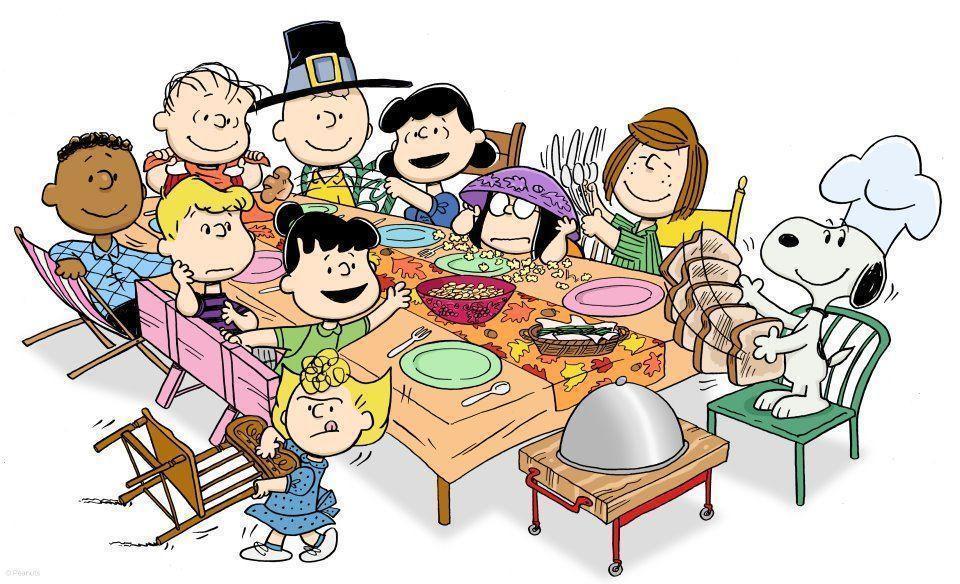
Charlie Brown's Thanksgiving

Ok, Thanksgiving was weeks ago. But it will come again and so will the accusation that it's racist, mainly because of this image showing Franklin, the only black character, sitting by himself.


First, lets put things in context. This cartoon was made in the 60s when cartoon characters in other strips were either white or embarrassing stereotypes. Franklin was written as just another kid. That was a big thing then. Including black characters was revolutionary and having one who doesn't make us cringe decades later is unique. Instead of condemning this as racist, let's give it credit for fighting racism. If the creators where actually racists then they wouldn't have included Franklin in the first place.

That said, there are reasons Franklin was seated where he was. Things look so lopsided because the Brown family (Charlie Brown, his sister and his dog) all sat together plus Peppermint Patty who had a crush on Charlie Brown. The singles, Linus, Franklin and Marcie all sat by themselves. If Marcie and Franklin's positions were switched, people would still be claiming racism. The impression of Franklin sitting by himself is plot-driven - they needed a table that was long enough for the Browns and Peppermint Patty to sit together.

But racism is often a matter of perspective. Look at this shot.


Franklin doesn't look lonely at all here. Or in this one which was done to publicize the show.

Or in this (undated) publicity still which includes the rest of the characters.

I will admit that it's possible that the animators kept Franklin at a distance because of the wide-spread racism that did exist at the time. It's unlikely but possible. Even if that happened, it's unfair to reframe a blow for racial equality as racist. Instead let's give proper credit to the cartoon for including a black character who wasn't a stereotype.

Friday, November 30, 2018

Marvel Comics - Who Deserves the Credit?

While most obituaries for Stan Lee gave him credit for creating the core of the Marvel Universe, a did see a few that revived the charges that Jack Kirby and Steve Ditko did all the work and Lee stole the credit. This is more complicated than it appears so I'll look at it from different angles.

First, no one would even care if it wasn't for Stan. Prior to Marvel, comics were either unsigned or had the writer and artist's name in a small box on the splash page. Few people paid attention to the credits. And most comic publishers (including Marvel's predecessor, Timely) had a house style to make it difficult to tell who did the art.

Stan changed that. He put the producer's names in a big box. When that wasn't enough, he made up nicknames or rhyming couplets or on-line jokes to get people to read the credits. He also allowed the artists to develop their own style. If you look at the very first Marvel comics, it's hard to tell who drew them. Kirby's distinctive style hadn't started to develop yet. A few years later you could tell who the artist was without reading the credits because they all had unique styles.

Stan also gave credit to the inker and letterer (and later the colorist). This is an interesting point because a lot of artists have a poor opinion of the contribution of the inker. Just look at the difference between Silver Surfer #5 and #6 (original run) to see how much difference an inker can make.

So, we only care about who got credit because Stan got us to read the credits.

A big argument is that the artist did so much more. Ditko complained that the artist took a bare outline of a story, fleshed it out, then broke it down by page an panel to decide the flow of the story. Then he'd decide who to include and what to show in each panel. That took a lot of time. Kirby was a very fast artist. He could produce a comic a week. Ditko was slower and did his own inking. He only produced one comic book (Spider-Man) plus two half-comics (Doctor Strange and the Hulk) per month. Lee took a fraction of that time to add the word balloons - often spending mornings working on plots with an artist then doing the dialog in the afternoon. So the artists were spending 5-10 times the amount of time on a comic as Stan did. Was it fair for him to give himself top billing?

To counter that, I'll point out that the artist probably figured out the pacing, etc. in an afternoon so his contribution to the story was similar to Stan's. Yes, drawing all the characters takes time but a lot of that is just drafting. It fills in the panel but doesn't add to the story.

And let's keep in mind what Stan did. Marvel had 4-5 comics come out every week and Stan was writing nearly all of them. In addition to that, he edited the letter's page and supervised everything else. Where Kirby might do 40-50 stories in a year, Stan was doing hundreds. Yes, he delegated a lot of the work to the artists but his part in it was still staggering.

Oh, but according to Kirby, Stan wasn't actually writing those comics. Kirby was writing the dialog in the margins and Stan copied them into the word balloons. Kirby claimed that for years. Stan's response was that Kirby's dialog was clunky and dated and he ignored it. Kirby never went back and looked at the finished books so he didn't realize that his dialog never made it to the finished page.

Who's telling the truth? I suspect that Stan did use some of Jack's dialog but I believe him when he says that he wrote most of it. Look at the other comics Marvel published at the same time. Then look at the comics Ditko and Kirby did after they left Marvel. Stan was right - neither Kirby nor Ditko did dialog as well as Stan. He was much better at giving each character his own style of speaking and his dialog was a lot punchier. Both artists' dialog sounded like lines from old movies.

So, my final point, how important was Stan's contribution? He may have made some suggestions but Kirby designed most of the characters' costumes. (Note: both Kirby and Ditko claimed credit for creating Spider-Man. Ditko claims that Kirby's creation was too similar to The Fly so they tossed that and Ditko started fresh. Certainly the costume and powers are typical for Ditko and very unlike anything Kirby did.)

Here's the thing about the characters - they aren't all that original. The Fantastic Four was all retreads. None of the characters had original powers and they wore blue jump-suits with a 4 on the chest. The Hulk was sort of Frankenstein's Monster mashed up with the Wolfman (for his first couple of appearances Bruce Banner turned into the Hulk at night). Iron Man and Thor had basically the same powers as Superman, just not on a much lower level. Marvel didn't start having characters who were really original until the X-Men.

Speaking as someone who started reading Marvel comics in the Silver Age, what really hooked me was the plots and dialog. They acted completely different than characters at DC. You never saw members of the Justice League argue and they were all pretty interchangeable. Marvel heroes argues, they told jokes, they had romances. And that was Stan.

By 1970 both Ditko and Kirby had left Marvel and gone on to DC. They were allowed to do whatever they wanted and they wrote their comics as well as drawing them. And they flopped big-time. Ditko created Hawk and Dove about a pair of brothers who were given powers. They argued a lot. It wasn't very interesting. He also did The Creeper about a reporter who could transform into a spooky character with yellow skin, green hair and a red mane coming from his shoulders. It was better but didn't last long.

Kirby made a big splash with his "4th World". He let his creativity loose, creating warring worlds of super-beings. They were all cancelled within 18 months. He tried again a few times. None of his comics were a success. One he created with Captain America co-creator was cancelled after its first issue.

Meanwhile, Marvel kept on going. Sales continued to improve until they overtook DC and the stories continued to be good. But, a couple of years after Kirby left, Stan was promoted and had to stop writing. Talented writers replaced him but you could really tell the difference. Marvel began a decline in quality that lasted most of the 70s. There were bright spots here and there but, in general, the books just weren't as good without Stan.

So that's my conclusion. Marvel survived the loss of Kirby's and Ditko's art far better than the loss of Stan's writing and neither artist was able to repeat his success at DC. Stan was indeed responsible for the success of Marvel Comics and its characters. Kirby and Ditko played a big part of that but Lee wasn't stealing credit due to them.

Wednesday, May 09, 2018

Defending the Ending (Of Avengers: Infinity War)

Recently someone on the Huffington Post insisted that Disney money ruined the ending of Avengers: Infinity War. He was referring to the characters who turned to dust at the end. Several have contracts for future films so he knows they will be restored. To him this ruined the movie.

I have news for this guy, I always knew that the deaths at the end of the movie would be reversed. It's not just because several of the vanished characters have upcoming movies. It's because it wasn't just them who died. It was half of everyone, everywhere. That's over three and a half billion people, just on earth - dead and gone at the snap of Thanos's fingers.

This is a comic book movie. At the end of Avengers: Civil War, Thanos won. He'd killed half of everyone, everywhere and retired to watch the sun rise.

But the bag guys don't win in comic book movies. And they certainly don't win when they've done something so monstrous. There may be some collateral damage along the way. The Ancient One or Doctor Erskine or Uncle Ben might die but the villain's plot will be foiled in the end.

That wasn't an ending, it was a cliffhanger. We know it will be reversed, Han won't stay frozen in carbonite, Jack Sparrow will be rescued from Davy Jones's Locker and half the population of the universe won't stay dead. The question is how will it be reversed and who will stay dead when it's all over?

For the record, I think that the Asgardians who were killed (plus Loki) and the people of Xandor will stay dead. There's an excellent chance that Gamora will be brought back to life because her death was so intimately tied to the Soul Gem. And there's a good chance that several more Avengers will die in the second movie and stay dead.

Monday, May 07, 2018

Starlin's Thanos - Infinity Wars

Great comic book characters seldom stay dead for long. Thanos was dead for most of a decade before returning to the realm of the living.

Unlike most resurrections, Thanos's was easily explained - Death herself sent him back. She had become concerned that the scales were out of balance and too many people were alive (there was possibly-true factoid going around at the time that half of everyone who ever lived was alive). Thanos was dispatched to correct that imbalance by killing half of everyone in the universe.

It started in the Silver Surfer. The Surfer fell asleep on a desolate world and dreamed about Death's servants releasing Thanos. When he awoke, Thanos was there, waiting for him. Thanos explained his goal and even made the Surfer complicit in killing off half the population of one world. The Surfer then collected as much background information as he could gather on Thanos. Then he went to face him. And won, surprisingly easily, leaving Thanos a smoking skeleton.

It was all a ruse. Death had warned Thanos that the Surfer could be a threat so Thanos faked his death and moved on to his real goal - the Infinity Gems.

While dead, Thanos had discovered the power the gems possessed. He convinced Death that without the gems it would take him a century to kill half the population of the universe. He then defeated a half dozen powerful beings in order to assemble the gems into the Infinity Gauntlet. This gave him total control over everything.

The only problem was that he was now Death's superior and she didn't like that one bit. Thanos spent some time trying to impress her by torturing relatives, spelling his name out with planets and removing half the population of the universe with the snap of his fingers. Death remained unimpressed.

All of this gave time for Adam Warlock to return to life along with Gamora and Pip the Troll (although Gamora had the bad luck to be in the half of the universe that was removed). Warlock assembled the remaining heroes of Earth along with the cosmic beings in a complicated plan to defeat Thanos.

The heroes were totally outmatched but Thanos thought that Death might look favorably on him if he gave them a chance so he cut off his extra senses. This almost worked. While fighting Captain America, Thanos raised his hand to strike and the Surfer grabbed for the Infinity Gauntlet. And missed.

Next the various cosmic entities tried and failed. At the end, Thanos defeated the entity known as Infinity - the personification of the universe itself - and took it's place. This left his body unguarded and Nebula, one of the relatives Thanos had been torturing, seized the Gauntlet and reversed all of Thanos's actions. That meant that she had to fight the cosmic entities all over again. While she was distracted, Warlock slipped back into the Soul Gem and used it to break the connection between the stones for a moment and rip the gauntlet from her hand. Warlock the emerged with the gauntlet and sent everyone home.

The cosmic entities complained that Warlock was too unstable to control the universe and he agreed to divide the gems up, giving them to protectors. These turned out to be Starlin's various creations - Adam himself, Gamora, Drax, Moon Dragon and Pip. The sixth gem went to someone secret (hint, Thanos). Together they formed the Infinity Watch to protect the universe from threats.

Unfortunately, the first two threats came from Warlock. While he possessed the gauntlet he exorcised himself of his good and evil parts. They proved to be as dangerous as Thanos.

Along the way, Thanos was redefined. Rejected by Death, he became a pragmatic survivor. He was similar to Magneto in the X-Men movies - someone who is very handy to have on your side but who might turn on you when your goals diverge.

Eventually Thanos gained ultimate power once more. This time he inspected the universe and discovered a cancerous hole in it. Too many people were coming back from the dead. He recreated the universe, fully expecting to perish in the attempt but managed to survive, back at his usual power level.

Starlin's exit from the character involved Thanos helping Galactus, the world-eater who had become infected. Thanos cured him, then warned him to be more careful in the future.

Considering that Galactus is at the top of the cosmic entities, that gives you an idea of Thanos's self-worth.

From there other writers took over Thanos and he was no longer just Jim Starlin's vision.

Sunday, May 06, 2018

Infinity War - the mistake that isn't

One "mistake" that I've seen pointed out about Avengers: Infinity War is the scene near the end where Captain America seems to stop Thanos's hand. (note, that was in the trailer so it's not a spoiler. Everything from here on contains spoilers.)

The "problem" is that Thanos already punched out the Hulk. In fact, he beat the Hulk so bad that he refused to come out for the rest of the movie. There's no way that Cap is as strong as the Hulk so what gives?

The answer has two parts.

First, Cap has super strength in the MCU. We've seen lots of examples of it starting with him running down the Nazi spy in Captain America: First Avenger. In The Avengers he holds his own against Loki. He beats several armored aliens with nothing but a shield. By Captain America: The Winter Soldier he's jumping out of airplanes without a parachute and running rings around Sam. In Captain America: Civil War he holds back a helicopter with his bare hands then he and Bucky (who has been similarly enhanced) beat Iron Man. Clearly Cap is superhuman. He may not be as strong as Iron Man but he's able to do things that would cripple a strong man.

The second part is Thanos. We actually have no idea how strong he is naturally. He already has the power gem before Infinity War begins. The Hulk blindsides him, overpowering Thanos but then Thanos draws on the power gem and beats the Hulk up. This is consistent with the comic books where Drax and Thor were able to increase their already considerable strength by drawing on the power gem.

All during the movie we see that Thanos only uses the gems consciously. That's probably the main function of the Infinity Gauntlet - to insulate Thanos from the stones and let him exert conscious control over them. Ronan did the same thing with the power gem in Guardians of the Galaxy The gem might have been able to destroy a planet but he only used a tiny fraction of its power.

We also saw this during the battle between Thanos, Iron Man, Spider-Man, etc. They nearly overpowered Thanos and got the gauntlet. They could never have done that it he was drawing power from the gauntlet. They managed to keep him off-balance enough that he was depending on his own considerable strength rather than the gauntlet.

This also explains why the effects of the reality gem were only temporary. He wasn't actually changing reality, he was overlaying it with a different one. When he stopped, the original reality returned. The people he sliced into pieces were back together, Star Lord's gun shot energy blasts instead of bubbles, etc.

So, Cap, who has super strength, was able to hold off Thanos who was not drawing power from his gauntlet - but only for a moment.

All of this changed during the battle when Thanos had a vision of Gamora as a child. That's when he finally integrated the gems into a single force and evaporated half of everyone, everywhere.

Tuesday, May 01, 2018

Avengers: Infinity War and the Hard Choices

Spoilers ahead.


If there's a unifying theme in Infinity War, it's hard choices. Characters are constantly being asked to make difficult choices.

The first one is when Thanos threatens to crush Thor's head unless Loki gives him one of the Infinity Stones. At first Loki refuses but then he changes his mind. But, being Loki, he tries to have it both ways. First he sics the Hulk on Thanos then tries to stab him, resulting in Loki's own death.

The Vision and the Scarlet Witch face a couple of hard choices. They want to stay together but need to separate. More on this pair later.

Gamora asks Peter Quill to kill her if she's captured. Later she has to choose to kill Thanos, even though he raised her and she still cares for him.

Both of these characters go through with the hard choices only to have them come to nothing. By this point Thanos controls the reality stone and their actions are rendered useless.

Later Gamora is asked to choose between her sister's life and giving Thanos the Soul Gem. She fails the choice, leading him to the 5th of five stones.

Doctor Strange warns Iron Man and Spider-Man that if he has to choose between their death and giving Thanos his stone, he will let them die. When the time comes, he seems to fail this test and gives up the stone in exchange for Iron Man's life. But he has seen 14 million possible futures and only one led to victory. So it's likely that Strange didn't actually make a choice.

In the final act, the assembled heroes are trying to keep from making a hard choice - destroying the Mind Stone and killing the Vision in the process. They fail and the Scarlet Witch makes the decision to destroy the stone and kill the Vision. Unfortunately, Thanos is able to use the Time Gem to undo this sacrifice.

Several heroes engage in self-sacrifice. Iron Man and Spider-Man stow away on a space ship, knowing it's likely to be a one-way voyage. Thor goes through a lot of punishment in order to get an new hammer. When Thanos's army threatens to flank the warriors, the Black Panther orders a force field opened to let the army in, knowing they will be attacked.

Let's not forget Thanos himself. He already made the hard choice - that half of the universe's population has to die. But he also has to kill the only thing he loves to get the Soul Gem.

Tuesday, April 24, 2018

Starlin's Thanos - Adam Warlock

After Thanos, the character most associated with Jim Starlin is Adam Warlock. Ironically, Warlock was a collaborative creation.

He began as an artificial being known as "Him" in a Lee/Kirby issue of the Fantastic Four. Some scientists had created Him for nefarious purposes but he escaped before they were ready. At the time, Him glowed so brightly that they couldn't tell what he looked like so they came up with the idea of sending a blind sculptor to do a model by touch. They kidnapped the Thing's girlfriend, Alicia, for this. Alicia wasn't really needed. By the time she found Him in a deep tunnel, he had grown a cocoon and was no longer glowing. This was really just an excuse for a story about the Thing's frustration while Reed devised a way to track Alicia. Eventually Him emerged from his cocoon, a perfect humanoid with golden skin and blond hair. He denounced his creators and left earth. The FF showed up jut in time to rescue Alicia and the Hive where Him was created was destroyed.

A few months later Him showed up in an issue of Thor. Him had an urge to mate and decided on the first woman he met - Thor's girlfriend Sif. Thor objected, strongly, and Him ended up retreating back to his cocoon.

A few years later Roy Thomas and Gil Kane brought back the character, giving him his name, costume and soul gem. While floating in his cocoon, Him came across the High Evolutionary. This was another Lee/Kirby creation - a scientist with an evolutionary accelerator that could create human/animal hybrids. He'd appeared in Thor and the Hulk before trying the accelerator on himself and becoming god-like. Now, he decided to create his own version of the Earth but without sin (this was known as Counter Earth because it was on the far side of the sun from our Earth). Him watched all this from his cocoon and kept the High Evolutionary company. After finishing his creation, the High Evolutionary rested and some of his evil creations took the opportunity to corrupt the Counter Earth. Him emerged from his cocoon and drove them off but they went down to Counter Earth.

The High Evolutionary was ready to scrap the project but Him offered to go clean things up. He was given his name, Adam Warlock, and his soul gem and sent on his way. The whole thing became an extended Jesus in the modern world parable. It didn't last long and the plot threads were tied up in the Hulk with the Hulk acting as Peter and Warlock regenerating from his death in his cocoon.

Based on his work on Captain Marvel, Starlin was given free reign over the character. He tossed out the Jesus influence and turned to the sword and sorcery character, Elric of Melniboné instead. Elric was an albino with all the associated health problems. He overcame these with the help of a magic broadsword that stole souls. This put him in a difficult position - he needed the sword but he hated it taking souls. Elric often fought his cousin who had a matching longsword. The Elric stories also had the conflict between chaos and order which influenced Starlin.

No previous mention had been made about where Adam's soul gem came from. All we knew was that it was powerful. Under Starlin, it began taking souls, at first when Warlock was under stress but later on command. But this was a side-note to Warlock's main struggle against an inter-planetary church that worshiped a powerful being known as the Magus. Along the way Warlock picked up a couple of side-kicks. The first was a troll named Pip. The second was a green-skinned assassin named Gamora who had been sent to kill the Magus.

Things get complicated now.

The Magus was actually a future version of Warlock who would become insane then evil. This process sent him into the past where he quickly conquered a primitive world and was worshiped as a god. Warlock's fight against the Magus was the first step to him becoming the Magus.

Along the way, Gamora failed to assassinate the Magus so her master decided to take a direct hand. The was Thanos.

It seems that despite being evil, the Magus was the chosen champion of life as embodied by the forced of Chaos and Death. Thanos was, of course, the champion of Death and his goal was to kill the Magus or prevent him from existing.

The two squared off in a battle but this was actually a diversion. While the Magus was distracted, Warlock used a time portal to change his future. First he eliminated the branch that created the Magus then he made sure the shortest branch would happen. Traveling a short ways into the future he came upon his future self dying and welcoming death. To prevent his future self from regenerating, Adam had his gem steal his future self's soul committing temporal suicide.

The Magus was about to defeat Thanos when he ceased to exist. The team went their separate ways, not realizing that Thanos was the actual winner.

Warlock's run lasted a few more issues. The final one had him finally take full control of his soul gem. In the process we got the first hint of what the gems were and that there were six of them.

In a non-Starlin teamup with Spider-Man, Warlock met a being called the Gardener who was raising his garden on the moon's blue area which has an atmosphere. It turned out that he had a soul gem of his own. A character named the Stranger came looking for their soul gems. The Stranger had one and desired all of them but he was driven off.

Starlin was given two double-sized issues to wrap up loose ends. In the first one, Adam, Captain Marvel and Moon Dragon joined with the Avengers to stop Thanos.

Thanos had already left Gamora and Pip dying and, after taking their souls, Adam found out Thanos's plot from Gamora's soul. Thanos had discovered at least some of the properties of the six soul gems and had drained off energy from them (including Adam's while he wasn't looking) to build a cannon capable of destroying stars. Thanos hoped that he would win Death's love if he destroyed enough life.

During the battle, Warlock managed to smash Thanos's cannon but Thanos left Warlock dying, ready for his past self to take his soul. For Adam, being in the soul gem was paradise and an end to a toured life.

Meanwhile in the real world, Thanos defeated the Avengers and decided that he could still use Warlock's gem to destroy out sun in the hope that would be enough to satisfy Death. Moon Dragon contacted Spider-Man who came to the rescue with the Thing. Thanos easily defeated both the Thing and Thor but that gave Spider-Man time to find the soul gem and release a version of Warlock. He turned Thanos to stone, killing him and leaving his body as a lesson.

Thanos made one final appearance in the Death of Captain Marvel. After multiple cancellations, Marvel decided to start with a new character so Mar-Vel died of cancer. Thanos appeared as the emmesary of Death to escort Mar-Vel to the other side.

Thanos and Warlock remained dead while Starlin moved on to other projects. They weren't revived until the 90s,