Tuesday, May 01, 2018

Avengers: Infinity War and the Hard Choices

Spoilers ahead.


If there's a unifying theme in Infinity War, it's hard choices. Characters are constantly being asked to make difficult choices.

The first one is when Thanos threatens to crush Thor's head unless Loki gives him one of the Infinity Stones. At first Loki refuses but then he changes his mind. But, being Loki, he tries to have it both ways. First he sics the Hulk on Thanos then tries to stab him, resulting in Loki's own death.

The Vision and the Scarlet Witch face a couple of hard choices. They want to stay together but need to separate. More on this pair later.

Gamora asks Peter Quill to kill her if she's captured. Later she has to choose to kill Thanos, even though he raised her and she still cares for him.

Both of these characters go through with the hard choices only to have them come to nothing. By this point Thanos controls the reality stone and their actions are rendered useless.

Later Gamora is asked to choose between her sister's life and giving Thanos the Soul Gem. She fails the choice, leading him to the 5th of five stones.

Doctor Strange warns Iron Man and Spider-Man that if he has to choose between their death and giving Thanos his stone, he will let them die. When the time comes, he seems to fail this test and gives up the stone in exchange for Iron Man's life. But he has seen 14 million possible futures and only one led to victory. So it's likely that Strange didn't actually make a choice.

In the final act, the assembled heroes are trying to keep from making a hard choice - destroying the Mind Stone and killing the Vision in the process. They fail and the Scarlet Witch makes the decision to destroy the stone and kill the Vision. Unfortunately, Thanos is able to use the Time Gem to undo this sacrifice.

Several heroes engage in self-sacrifice. Iron Man and Spider-Man stow away on a space ship, knowing it's likely to be a one-way voyage. Thor goes through a lot of punishment in order to get an new hammer. When Thanos's army threatens to flank the warriors, the Black Panther orders a force field opened to let the army in, knowing they will be attacked.

Let's not forget Thanos himself. He already made the hard choice - that half of the universe's population has to die. But he also has to kill the only thing he loves to get the Soul Gem.

Tuesday, April 24, 2018

Starlin's Thanos - Adam Warlock

After Thanos, the character most associated with Jim Starlin is Adam Warlock. Ironically, Warlock was a collaborative creation.

He began as an artificial being known as "Him" in a Lee/Kirby issue of the Fantastic Four. Some scientists had created Him for nefarious purposes but he escaped before they were ready. At the time, Him glowed so brightly that they couldn't tell what he looked like so they came up with the idea of sending a blind sculptor to do a model by touch. They kidnapped the Thing's girlfriend, Alicia, for this. Alicia wasn't really needed. By the time she found Him in a deep tunnel, he had grown a cocoon and was no longer glowing. This was really just an excuse for a story about the Thing's frustration while Reed devised a way to track Alicia. Eventually Him emerged from his cocoon, a perfect humanoid with golden skin and blond hair. He denounced his creators and left earth. The FF showed up jut in time to rescue Alicia and the Hive where Him was created was destroyed.

A few months later Him showed up in an issue of Thor. Him had an urge to mate and decided on the first woman he met - Thor's girlfriend Sif. Thor objected, strongly, and Him ended up retreating back to his cocoon.

A few years later Roy Thomas and Gil Kane brought back the character, giving him his name, costume and soul gem. While floating in his cocoon, Him came across the High Evolutionary. This was another Lee/Kirby creation - a scientist with an evolutionary accelerator that could create human/animal hybrids. He'd appeared in Thor and the Hulk before trying the accelerator on himself and becoming god-like. Now, he decided to create his own version of the Earth but without sin (this was known as Counter Earth because it was on the far side of the sun from our Earth). Him watched all this from his cocoon and kept the High Evolutionary company. After finishing his creation, the High Evolutionary rested and some of his evil creations took the opportunity to corrupt the Counter Earth. Him emerged from his cocoon and drove them off but they went down to Counter Earth.

The High Evolutionary was ready to scrap the project but Him offered to go clean things up. He was given his name, Adam Warlock, and his soul gem and sent on his way. The whole thing became an extended Jesus in the modern world parable. It didn't last long and the plot threads were tied up in the Hulk with the Hulk acting as Peter and Warlock regenerating from his death in his cocoon.

Based on his work on Captain Marvel, Starlin was given free reign over the character. He tossed out the Jesus influence and turned to the sword and sorcery character, Elric of Melniboné instead. Elric was an albino with all the associated health problems. He overcame these with the help of a magic broadsword that stole souls. This put him in a difficult position - he needed the sword but he hated it taking souls. Elric often fought his cousin who had a matching longsword. The Elric stories also had the conflict between chaos and order which influenced Starlin.

No previous mention had been made about where Adam's soul gem came from. All we knew was that it was powerful. Under Starlin, it began taking souls, at first when Warlock was under stress but later on command. But this was a side-note to Warlock's main struggle against an inter-planetary church that worshiped a powerful being known as the Magus. Along the way Warlock picked up a couple of side-kicks. The first was a troll named Pip. The second was a green-skinned assassin named Gamora who had been sent to kill the Magus.

Things get complicated now.

The Magus was actually a future version of Warlock who would become insane then evil. This process sent him into the past where he quickly conquered a primitive world and was worshiped as a god. Warlock's fight against the Magus was the first step to him becoming the Magus.

Along the way, Gamora failed to assassinate the Magus so her master decided to take a direct hand. The was Thanos.

It seems that despite being evil, the Magus was the chosen champion of life as embodied by the forced of Chaos and Death. Thanos was, of course, the champion of Death and his goal was to kill the Magus or prevent him from existing.

The two squared off in a battle but this was actually a diversion. While the Magus was distracted, Warlock used a time portal to change his future. First he eliminated the branch that created the Magus then he made sure the shortest branch would happen. Traveling a short ways into the future he came upon his future self dying and welcoming death. To prevent his future self from regenerating, Adam had his gem steal his future self's soul committing temporal suicide.

The Magus was about to defeat Thanos when he ceased to exist. The team went their separate ways, not realizing that Thanos was the actual winner.

Warlock's run lasted a few more issues. The final one had him finally take full control of his soul gem. In the process we got the first hint of what the gems were and that there were six of them.

In a non-Starlin teamup with Spider-Man, Warlock met a being called the Gardener who was raising his garden on the moon's blue area which has an atmosphere. It turned out that he had a soul gem of his own. A character named the Stranger came looking for their soul gems. The Stranger had one and desired all of them but he was driven off.

Starlin was given two double-sized issues to wrap up loose ends. In the first one, Adam, Captain Marvel and Moon Dragon joined with the Avengers to stop Thanos.

Thanos had already left Gamora and Pip dying and, after taking their souls, Adam found out Thanos's plot from Gamora's soul. Thanos had discovered at least some of the properties of the six soul gems and had drained off energy from them (including Adam's while he wasn't looking) to build a cannon capable of destroying stars. Thanos hoped that he would win Death's love if he destroyed enough life.

During the battle, Warlock managed to smash Thanos's cannon but Thanos left Warlock dying, ready for his past self to take his soul. For Adam, being in the soul gem was paradise and an end to a toured life.

Meanwhile in the real world, Thanos defeated the Avengers and decided that he could still use Warlock's gem to destroy out sun in the hope that would be enough to satisfy Death. Moon Dragon contacted Spider-Man who came to the rescue with the Thing. Thanos easily defeated both the Thing and Thor but that gave Spider-Man time to find the soul gem and release a version of Warlock. He turned Thanos to stone, killing him and leaving his body as a lesson.

Thanos made one final appearance in the Death of Captain Marvel. After multiple cancellations, Marvel decided to start with a new character so Mar-Vel died of cancer. Thanos appeared as the emmesary of Death to escort Mar-Vel to the other side.

Thanos and Warlock remained dead while Starlin moved on to other projects. They weren't revived until the 90s,

Friday, April 13, 2018

Starlin's Thanos Part II

Marvel was expanding rapidly in the early 1970s and brought in a bunch of young talent. Jim Starlin was one of these. He joined Marvel in 1972. One of his first assignments was three issues of Iron Man. He already had a stable of characters created along with a plot arc. He used his time on Iron Man to introduce them.

The issue began with a call for help from Drax, the Destroyer. At the time he was normal size and intelligence. He had been captured after a battle with Thanos and needed Iron Man. Iron Man assumed that he needed to use his repulsor rays on Drax's restraints. That failed and the backlash knocked him off his feet. Our first glimpse of Thanos was his foot stomping Iron Man's hand with pieces flying off. Obviously he was a force to be reckoned with.

Our first full view of him showed a massive, stone-faced being with a hooded woman at his side. He referred to "having death at my side".

There were numerous similarities between Thanos and Jack Kirby's Darkseid besides the physical similarities. According to Roy Thomas, Starlin was originally going to make Thanos look like Metron, another of Kirby's New Gods but Thomas suggested Darksied himself. When Thanos returned in the 1990s, he spent a while using a floating chair like Metron's.

Kirby's characters were gods living on a city, floating above a ruined planet. Starlin's were Titans, living on Saturn's moon, Titan. Darkseid was after the Anti-Life Equation. Thanos was in love with the physical personification of Death. At one point, Thanos's father referred to him as being attracted to the dark side (a possible Darkseid).

While there were lots of similarities to Kirby's Fourth World, Starlin did quite a bit of world-building on his own. He already had a whole back-story for the characters. Thanos was son to Mentor, the leader of the Titans. Thanos had a brother, Eros. All of these are Greek concepts - mind, love, and death. Thanos had become enamored with Death years (possibly decades, the continuity was spotty) before. He had attracted an army of followers.

On one scouting run his spaceship was seen by a family returning from an Elvis concert. Thanos ordered the family killed. Their daughter survived and was raised in martial arts and telepathy, later becoming known as Moondragon. The father's soul was intercepted and given a powerful new body, becoming Drax.

Anyway, it eventually turned out that Drax only needed Iron Man's armor as a focusing point for an energy beam from Titan. After that, Thanos, Drax and company moved on.

Now it's time for another digression - Captain Marvel.

The Golden Age Captain Marvel was a newsboy who could say a magic word and become a Superman clone. DC comics spent years suing over the similarities and ended up with the rights to this character when the Golden Age ended and super hero comics weren't worth the court costs. DC didn't do anything with the character and let the trademark lapse. Another company introduced an android named Captain Marvel in the Silver age but that only lasted a couple of issues.

After the trademark lapsed again, Marvel comics introduced their own Captain Marvel. This was was a captain named Mar-Vell, an alien in the Kree milirary, sent to spy on Earth after the Fantastic Four defeated one of the Kree's sentinels and Ronan the Accuser (the guy from the Guardians of the Galaxy movie). 

Mar-Vell wore a white and green uniform that had built-in rockets and a "unibeam". Coming from a larger world, he was stronger than humans. Mar-Vell was part of a love triangle with the captain and medical officer. The comic was not very successful and after a few years they changed it completely. His girl-friend and commanding officer were killed, he was given a new red and black costume and a new set of powers. The idea was to bring him closer to the Golden Age Captain Marvel so Mar-Vell was trapped in the Negative Zone and could only be released for an hour by switching places with Rick Jones, Stan Lee's answer to annoying teen side-kicks. The revised Captain Marvel didn't last long but was brought back fairly quickly. This is the version that Starlin took over for.

Starlin managed to work both Rick Jones and Mar-Vell into the story arc. Thanos needed Rick Jones and Mar-Vell had been selected for enlightenment by a cosmic entity. As a lead-in to this, Mar-Vell was characterized as stubborn and too quick to react. This got him through some fights but after the Controller dropped a house on him, he was spirited away and given Cosmic Awareness.

Even this wasn't enough to stop Thanos. Years earlier, Rick Jones had been stimulated by the Kree Supreme Intelligence to stop a war with the alien Skrulls. As a backup measure, the Supreme Intelligence had placed the location of the Cosmic Cube in Rick's brain. Thanos's grand plan began with recovering the Cube since it had nearly unlimited power. Thanos managed to find the cube and transferred all of its power to himself making him a god.

Thanos seemed unbeatable but Mar-Vell's Cosmic Awareness let him realize that Thanos was still drawing power from the Cube. Mar-Vell managed to destroy it (or at least cut Thanos off from it), defeating the mad god.

Starlin did a couple of more issues of Captain Marvel before moving over to a different comic, Warlock. And that's a good time to end this entry.


Thursday, April 12, 2018

Starlin's Thanos - Early Influences

With Avengers Infinity War coming out soon, I thought I'd trace the origins and development of the character of Thanos. I'm only looking at the character as developed by his creator, Jim Starlin and Starlin's influences.

Things began back in the 1930s when an English professor at Oxford invented a new word and decided to write a book to go with it. The word was "hobbit" and the professor was J. R. R. Tolkien. His book, The Hobbit was a great success and his publisher pressed him for a sequel. It took over a decade but Tolkien eventually produced The Lord of the Rings, the best-selling book of the 20th century and the 3rd best seller of all time. It was originally published in 1954-55 (spread over three volumes which were released months apart). It really took off in the late 1960s.

Now, we jump from that to Jack Kirby. Kirby, along with Stan Lee, created the backbone of the Marvel Universe. Over his career, Kirby seldom stayed in any one place for more than a few years but he'd spent the 1960s at Marvel. While his collaboration with Stan was legend, Kirby was becoming uncomfortable. One issue was creator's rights. Marvel was a fairly small company at the time and didn't have enough money to pay royalties for characters created (and the idea that these characters would eventually be worth billions was preposterous at the time). Marvel took the position that Kirby was doing work for hire and that anything he created belonged to Marvel. They had a special 50-page contract for him that dealt with creator's rights.

In addition, Kirby's relationship with Stan had soured. One reason was the Silver Surfer. For Fantastic Four #50, Stan and Jack decided to introduce a new character who was an order of magnitude more powerful than the standard villain. This was Galactus, the world-eater. The two of them agreed on a plot, Kirby drew the pages and sent them back to Stan to add dialog. Stan got about half-way through and hit a character they hadn't discussed - a naked, bald guy on a flying surfboard. "Who's this" Stan asked. "I figured anyone that powerful would have a herald," Jack answered. The Surfer quickly became Stan's favorite character and he was very possessive of him. When the Surfer got his own comic, Jack was not assigned to it. They also disagreed on the Surfer's origins. Kirby wanted him to be space-born but Stan wrote him as a humanoid who became the Surfer through an act of self-sacrifice.

The Marvel-style of creating comics created its own problems. For most of the 60s, Stan wrote most of the comics. The traditional way of doing a comic book was for the writer to create a finished script with plot and dialog broken down by page. This would be given to the artist to draw. Stan didn't have time for that so, instead he and the artist would have a story conference where they decided on the general plot. The artist would decide the pacing and was free to add other flourishes (like the Silver Surfer) as long as it was close enough to the original plot for Stan to add the dialog to.

Somewhere along the way, Kirby started putting dialog in the margins. In his mind, he was doing the complete comic and Stan would copy his dialog from the margins to the word balloons and take credit for them. Stan insisted that Jack's dialog was clunky and dated and that Stan ignored it except as an occasional guide to what was going on in the panel.

In 1960, Kirby approached DC Comics about a job. They were thrilled. The rumor in the industry was that Jack did all the work while Stan took all the credit so they expected to get a stable of characters comparable to Marvel's. They were also able to offer a better deal on creator's rights.

Kirby was given free reign to do anything he wanted. He launched his "Fourth World" - three comics with intertwined plots.

This is where the Lord of the Rings comes in. Kirby loved to adapt outside influences. In the Fantastic Four they did takes on The Prisoner and a mash-up of 1930s gangsters and gladiators. So Kirby took the idea of a trilogy and the middle part of the Lord of the Rings where the Fellowship has broken up into three different groups, all working against the common enemy.

In the Lord of the Rings, the villain was Sauron, a powerful character who would become unstoppable if he recovered the One Ring. Even without it, his armies threatened the world.

Kirby's version of this was Darkseid (pronounced dark side). He was a large, stone-faced being powerful enough to defeat Superman. He ruled a post-apocalyptic world (named Apokolips) which was dominated by fire pits and populated by his slaves and soldiers. Fighting him were the New Gods and the Forever People from New Genesis and Mr Miracle, an escape artist on Earth. It was strongly implied that the New Gods were the survivors of the Norse Ragnarok who built a new civilization.

Years earlier New Genesis had a war with Apokolips. This came to an end with an exchange of prisoners - the first-born sons of the two leaders. Mr. Miracle was the hostage from the New Genesis. He was raised as an ordinary dog soldier, not knowing his parentage. Eventually he escaped to Earth, unwittingly ending the truce. Darkseid's son was raised to be the champion of the New Gods.

While there were several skirmishes, Darkseid's goal was to discover the Anti-Life Equation. Just as the One Ring would give Sauron control of the other rings and their bearers, the Anti-Life Equation would give Darseid control over all free will.

It was very exciting. Kirby started the story in the middle and filled in the background over the next several months. The New Gods protected the Earth as Darkseid tried to make it a beach-head for a new attack on New Genesis. The Forever People (essentially hippie gods) protected the Anti-Life Equation and Mr Miracle escaped a lot and married a hot woman with super strength.

Kirby also took over Jimmy Olsen, Superman's Friend and had some cross-overs there, too.

There was one big problem with all of this - Kirby wasn't a very good writer. His dialog often sounded like it came from the 1940s and the idea of starting in the middle and filling in the pieces later confused people. His Fourth World only lasted 59 issues (spread across four titles) and he'd backed off of the war against Apokilips before the end.

But one big fan was a kid in high school who was a natural artist named Jim Starlin.

too be continued

Sunday, March 25, 2018

The Problems With Black Panther

The movie Black Panther has made a phenomenal amount of money and scored high on critic's sites like Rotten Tomatoes but, let's face it, it was graded on a curve. It was fine but I'd rank it as middle of the pack. It had a number of problems, some in the content and some in the execution.

First of all, the movie was too long. The opening act was overstuffed with two raids by the Wakandans, a challenge match for the crown, a heist a meeting between the panther and his father and a shoot-out between Klaue and Kilmonger. And that was all just setting up for the main plot. Before the movie was finished we had two more challenge matches and both the Panther and Killmonger met with their fathers in visions. Plus a civil war among the Wakandans.

The next problem was that too much was going on in the final battle. We had the Panther fighting Kilmonger, a fight between the royal guard and the rest of the cast plus a CIA agent shooting down some transport drones before a drone killed him. There was too much going on to keep track of and too many people to really be invested in any of them. This has been a problem in Marvel movies since Iron Man.

Wakanda is presented as an African paradise but it's actually pretty messed up. Income inequality is terrible. You see a gleaming, futuristic city with street vendors. Newsflash - it's really hard to make ends meet selling things from a stall on the street. Plus other parts of the country have farmers and herders living in primitive huts.

Then there's the monarchy. The country has an absolute ruler. Kilmonger's first order after becoming king is to order the patch of heart-shaped herbs to be burned. This is central to their culture but they do it without question. Then Kilmonger declares war on the rest of the world and the Wakandans go along with it with only token objections.

The challenge by combat is pretty strange, too. It's bad enough having someone who rules because of an accident of birth. It's worse when he can be replaced by anyone from the right family who can beat him in hand-to-hand combat.

The pressures of the monarchy show. By the end of the movie the Wakandan elite are engaged in a civil war.

The Wakandans are jerks. In the opening sequence we see a strike team lead by the Panther take a convoy that is obviously Christian girls who were kidnapped by Islamic extremists. But it turns out that they couldn't care less about the innocent girls. They were just there to invite the Panther's ex-girlfriend to the coronation. The girlfriend is the only one who actually cares about helping people in the outside world.

The final problem a delicate one and I'll probably offend people by bringing it up but let's face it, the movie has racism at its core. I know there is a school of thought that says that only the culture in power can be racist but, in this case, the Wakandans are the dominant culture. There is only one white actor among the leads. The Panther's sister calls him a "colonizer" which is meant as a racial insult. After all, he's American and the US never colonized Africa and Wakanda was never colonized so the term is being used as a slur against all whites. Later he's told to shut up or he'll be fed to the gorilla tribe leader's children (Just a joke since they're vegetarians). That's how minorities were treated in movies from the 30s and 40s. 

The basic conflict in the movie is between two viewpoints. Kilmonger echos the Nation of Islam in believing that white are the devil and Wakanda must conquer them. Opposing him is the traditional view that white are the devil and Wakanda must hide from them.

These problems aren't fatal to the movie but I was aware of them, especially the running time.

Wednesday, December 27, 2017

Grading the Doctor Who Christmas Specials

There have been 13 modern Doctor Who Christmas specials. The most recent one marked the end of Steven Moffat's time with the Doctor and Peter Capaldi's final episode. So how do they rank:

1) The Christmas Invasion.  B-
This was David Tennant's introduction. It had a few problems. There were plot holes such as how the various creatures knew to attack Rose's family. The biggest problems were that Tennant spent most of the episode regenerating. He only really appeared in the last 15-20 minutes. Worse, he saved the day by dueling with an alien with swords. I'm pretty sure that's the only time the Doctor has won by fighting his way out. He also killed the alien leader (using an orange to trigger a trap door). That was pretty cold, too.

On the plus side, Tennant put everything into his intro, When you see this and late episodes like The Waters of Mars you see how he got too used to the role and was essentially on autopilot.

2) The Runaway Bride. A-
This was a much better plot. It also introduced Donna who would become the Doctor's companion a season later. 

3) Voyage of the Damned.. A-
This was a good old-fashioned Doctor Who plot. We meet a bunch of people then a malignant force starts killing them with only a few (or only one in this case) still alive at the end.

4) The Next Doctor. A+
This was Tennant's best Christmas episode. It took place in Victorian England with Cybermen running around, making a giant steampunk version of themselves. It also teased the fact that Tennant was going to be replaced. From the name, people expected to meet the next doctor but it was a fake-out.

5) The end of Time. B+
Points off for stuffing too much into this one. First the Master was resurected and hatched a master plan to turn everyone on earth into a copy of himself. Then the Timeslords had a plan to return from where ever they were trapped (that keeps changing). And after all of that was sorted out, the Doctor had to sacrifice himself for Donna's aging grandfather who walked into the wrong room at the wrong time. That was followed by a half hour of the Doctor visiting everyone important from Tennant's time. On top of that, there was a dropped sub-plot about President Obama giving a speech on saving the world's economy. Why was that there? And why would Obama give a speech on Christmas instead of lazing in the Hawaiian sun? Who knows?

The episode itself was fine but it could easily have been a half hour shorter and no one would have noticed.

6) A Christmas Carol. A++
This was Matt Smith's first Christmas special. It was also the first one under Moffatt instead of Russell T Davies. This one was hands-down the best, slightly edging out The Next Doctor. It had flying fish, a flying shark-drawn carriage, a hint of what Amy and Rory's honeymoon was like, Dumbledor (Micheal Gambon) and a sort-of cameo by Marilyn Monroe. All with in a steampunk world.

7) The Doctor, The Widow, and the Wardrobe. A
Moffatt tried hard to top the previous Christmas special by doing a version of the Lion, the Witch and the Wardrobe. It wasn't as good but it still worked.

8) The Snowmen. B
This was Clara's second sort-of introduction (and her second death) before she became the Doctor's companion. This took place after Amy and Rory left and the Doctor was depressed. Even taking place in Victorian London didn't brighten things up. It also introduced The Great Intelligence who promptly vanished until The Name of the Doctor. This wasn't a terrible episode but it wasn't a great one either.

9) The Time of the Doctor. B-
This one makes The Snowmen look light and happy. After a promising start, the Doctor ends up on the planet that he is to die on where he spends hundreds of years fighting off aliens until he dies of old age. Clara convinces the Time Lords to regenerate the Doctor and he uses the regenerative energy to destroy all of the aliens. This episode attempts to wraps up all the unresolved plot threads from previous seasons. It isn't very successful at that. (The Silence really planned on destroying the universe in order to keep the Time Lords from returning?) It did have a brief return of Amy which was handled better than Tennant's long drawn-out finale.

10) Last Christmas. C-
This seemed like it was going to be a fun episode. Santa and the Doctor are trying to save a group of scientists in a research station at the North Pole. But it turns out that it's all an illusion caused by aliens eating at their minds. I didn't like it. Capaldi's first season was marred by episodes that were so dumb they made your brain hurt (the Moon is an egg and when it hatches the new-born creature immediately lays an identical Moon) and this was one of them.

11) The Husbands of River Song. A
 What a turn-around. This is what Capaldi's Doctor should have been like. From start to almost-finish it was a lot of fun. It also wraps up River's story with the Doctor sending her off to die in the Library after scanning her so that she can be downloaded and saved. 

12) The Return of Doctor Mysterio. A-
The Doctor accidentally gives a boy super powers. Fortunately the boy was a big fan of Superman (the Chris Reeves version) so he uses his powers for good. I gave this one a minus for being too light and fluffy but it's dun to watch.

13) Twice Upon a Time. B-
What if they had a Christmas special where nothing happened? That's this one. It has the 1st and the 12th Doctors together, each fighting a regeneration. I'm not quite sure why they are together. There's also a British officer from WWI who was about to die. There are some aliens but it turns out that they aren't doing anything wrong so there's nothing for the Doctors to do. Eventually everyone accepts their death. The officer is saved by the Christmas truce of 1914. The Doctors regenerate. This was really just filler. They'd already killed off Doctor and they weren't ready to do a full episode with the 13th Doctor so nothing really happened. At least the interplay between the Doctors was fun.

Monday, November 13, 2017

Thor and Wonder Woman's Progressions

Boilerplate warning - this is nothing but spoilers.

Wonder Woman was very similar to Captain America: First Avenger in tone and subject matter but the character arc was closer to Thor: Ragnarok. In both movies, the hero is a god or demi-god who has to face a more-powerful sibling. Thor fought Hela, the Goddess of Death. Wonder Woman fought Aries, the God of War.

Both heroes's weapons fail them. Wonder Woman was armed with a sword and shield that she'd been told were made to kill Aries. Instead the shield was lost in an earlier battle and Aries melted the sword. Thor threw his hammer at Hela at their first meeting. She stopped it with one hand the shattered it.

Both heroes had to discover the power within themselves. There were a few hints of Wonder Woman's potential early on but she really came into her own during the fight with Aries.

After Thor's hammer was shattered we saw some sparks from his fingers. The Grandmaster even made fun of it. It wasn't until he was fighting for his life against the Hulk that Odin came to him in a vision and his full powers manifested for the first time. He had a longer vision during his fight with Hela and gained full control of his abilities as God of Thunder.

But here's where the stories diverged. Wonder Woman slammed her bracelets together and vanquished Aries. All she had to do to was reach her full potential.

In contrast, after Thor hit Hela with the biggest lightening bolt ever, she dusted herself off and returned to the fight. She was simply more powerful than Thor. His only solution was to bring about Ragnarok. And he didn't even do it himself. He sent Loki to do it while he provided a distraction.

You can argue about which movie is better but Thor had the more mature hero's journey. He learned to sacrifice in order to be a good leader and he paid a price with the loss of Asgard and his right eye. Wonder Woman lost Steve Trevor. Thor went on to lead his people in the search for a new homeland. Wonder Woman joined the staff of the Louvre. For all its goofiness, Thor Ragnarok is the more mature of the two movies..

Monday, September 25, 2017

The Diversity Trap - Part 3

Topical comic books are popular but often run into problems because the writer has strong views on a subject and slants the stories to match his own view.

Note that including a topical theme based on what the writer and artist wants goes all the way back. In his first issue, Superman took on corrupt politicians. The image of Superman smashing a car on the cover of Action Comics #1 occurred when he chased down a crooked politician. Captain America punched Hitler on the cover of his first two comics even though the US was still officially neutral.

After that, though, things died down for decades. Stan Lee and Jack Kirby started introducing messages in the mid-60s with the introduction of the Sentinels in the X-Men. This was the first "they hate us because we're different" story arc in comics. Mutants been successful for decades as a stand-ins for blacks and gays in society.

Stan also included some more overt stories such as ones revolving around the KKK-inspired Sons of the Serpents.

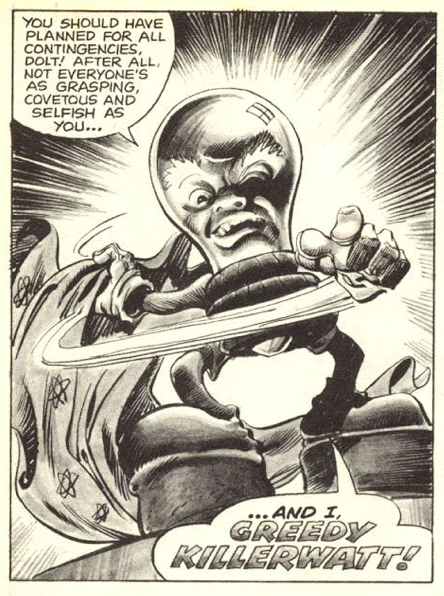
But sometimes a really committed creative team goes overboard and writes a heavy-handed story. Writer Bill Mantlo hated the nuclear power industry (he referred to it as the moral equivalent of the Holocaust) so he wrote a story where Howard the Duck was threatened by the personification of the nuclear power industry, Greedy Killerwatt.


 Howard had to stop Greedy in order to save Santa Claus.

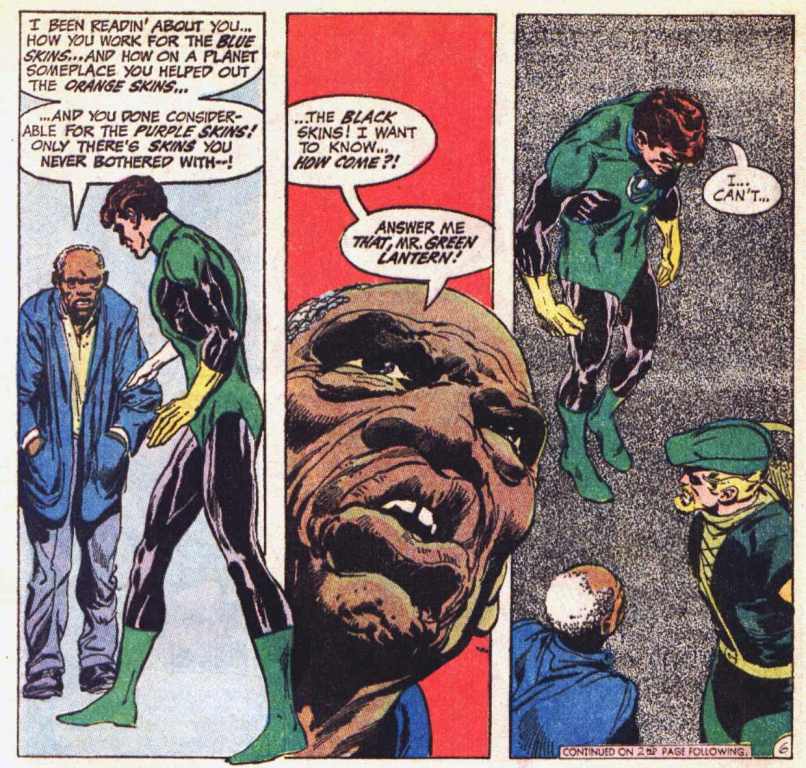
Over at DC, Green Lantern landed in a ghetto where he discovered he was unpopular.

(Personally, my answer would have been "I saved the planet three times this week. Isn't that enough for you?) Green Lantern and Green Arrow teamed up and traveled the country in search of the "real America". This led to several heavy-handed stories including this one where an Eco-sabateur is crucified by angry workers at an aircraft plant.


And, back at Marvel, the head of the Secret Empire turned out to be President Nixon.


So, heavy-handed plots about topical subjects are nothing new.

Never the less, I'm still bothered by the current story arc in Sam Wilson, Captain America. Sam, aka the Falcon, is now Captain America. The story arc is meant to reflect Black Lives Matter. In it, a private security group called the Americops has become the country's predominant police force. In reality, they are more concerned with driving minorities out of depressed neighborhoods to make it easier to gentrify them. Falcon/Captain America and a black hero named Rage discover this. Rage is framed for robbery and sent to a private prison for super-villains where he is beaten and left hospitalized with brain injuries. In the meantime there is mass protests with some rioting and looting.

For those who have forgotten, the events that lead to the creation of Black Lives Matter - the deaths of Trevon Martin and Micheal Brown were both found to be justified because, in both cases, they engaged in an unprovoked assault on a smaller man putting him fear of his life. In both cases, the Civil Rights division of the Justice Department reviewed the cases and said that there was no attempt by the shooter to deprive the deceased of his civil rights. In other words, they agreed that the shootings were justified. Also the "Hands up don't shoot" meme never happened. I'd also like to point out that real live cops have been killed by people inspired by BLM protests.

So the story arc in Captain America was contrived to remove any ambiguity and to be sure that there could be no possible sympathies except for blacks. Police have been replaced by silent, faceless corporate employees. There is no question that Rage is innocent. The only ambiguity here is if it is appropriate to burn everything down in the hope that something better would replace it. The whole story arc is contrived to make BLM seem justified in their protests.

And back over at DC, Superman saves some illegal immigrants from a racist who wants to kill them for taking his job.


Again, this is a contrived situation. Many people have reacted the wrong way to this. No one can seriously argue with Superman saving people from a gunman. The story is designed to make anyone objecting look bad. The real objection is that this doesn't happen. No one is shooting illegal aliens for taking jobs. The story is written specifically to make you cheer for the illegals. That's what makes it heavy-handed.
 

Saturday, September 23, 2017

The Diversity Trap - Part 2

Earlier I wrote about how changing comic book characters in the name of diversity is self-limiting. This time I'll talk about how pushing original characters because they are diverse is also self-limiting.

Marvel mad a push for more diverse characters back in the 1960s. It began when Stan Lee instructed the colorists to start putting black faces in crowds. The Black Panther was a milestone. He was the first black African superhero in comics, breaking the mold of Tarzan where Africans were dependent on a white man to save them (or in Tarzan's case, often to prey on them).

Luke Cage was the first black solo title. He was a working-class hero with an office in a run-down theater on Time Square. He acted as a super-powered private eye, taking cases for money.

The Panther got his own comic, also. In his case, he was fighting (communist?) revolutionaries in his country of Wakanda. While these had elements of the "blaxploitation" fad in movies, they still had a number of good stories and both characters are still popular today.

Marvel also introduced "The Cat" which was the first comic book featuring a woman superhero which was written and drawn by women. It was a total flop. A few years later they introduced the female spin-off characters Ms Marvel and She-Hulk. Both are still around although both now go under their male counter-parts names (Captain Marvel and Hulk).

So, just to the present and "America". I have to admit that I'm not familiar with the character so America #1 was my introduction to her. I'm going to do something different for me and go over the comic in detail.

It starts with 9 panels of people saying how great she is. The next page is a splash of America apparently saving some brown-skinned people from a piece of falling concrete while exclaiming "..America's got you". That's followed by a brief introduction to the character. Apparently she's been around for a while but she's gotten tired of being a hero so she's going to college. Also she's from a different dimension and she's the lesbian daughter of lesbians. I'm not quite sure how this works. And how can she be Latina when she's from a different dimension? Latina means a woman from "Latin America".

And she's super-strong and can punch star-shaped holes between dimension!

It seems that the team The Ultimates is fighting an energy creature that looks like a woman. America is busy saving a little girl while Captain Marvel #2 (Monica Rambeau aka Captain Marvel/Spectrum and Captain Marvel #5 (Carol Danvers aka Ms Marvel/Binary/Warbird/Ms Marvel/Captain Marvel) fight the energy being.

America finishes saving the girl and goes to confront the energy creature who dispatched Spectrum with a blast of "white energy". America replies that "white means the absence of color" and gives her a taste of her "little brown fist". This causes the energy being to break into stars. Fight's over. BTW, white is all colors, black is an absence of color. Was this a racial slam or what?

On the next page we find out that the planet's healing itself now. This is a different planet? How did they get there? Why them? Why are they all women dressed in pink? Why do they act so inane ("Yea, we're not dead?" "Will you stay forever and be my best friend?")

The next page finds the three superheros on a video conference with the Black Panther and Blue Marvel. There's a lot of dialog about pseudo-science while America thinks that it was too easy. We still don't know how the Ultimates got there but it might be a different dimension instead of a different world.

I'm going to pause for a moment to discus power levels. Monica and Carol have been around for decades and both are very formidable characters. But America was able to to defeat this thing with one punch. I looked up her powers and she can also fly faster than light. All of this seems kind of over-powered for a Marvel hero. Who can give her a good fight? Thanos?

Next page and she's back on earth having a romantic moment with her girlfriend. The following page is the middle of the night and they break up. I'm confused. Was this relationship important in America's previous appearances? Why bother using two pages of her first solo comic introducing then breaking up the characters?

The next page finds America working on a van and talking to Kate Bishop who they keep calling "the real Hawkeye". Obviously I missed something here. I thought the "real" Hawkeye was the guy in purple who's been around since the 1960s. There's a caption that says the two are somewhere mid-way between Cali and NYC. The background looks alot further west than "mid-way". Did Hawkeye drive half-way across the country to keep America company while she fixed her van? Or were the two going in different directions? And why does someone who's super-strong and can fly need to drive a van across the country? Couldn't she pick the van up and carry it?

Next is a splash page of the college America enrolled in - Sotomayer University. Apparently the "university" only has one department, the Department of Radical Women and Intergalactic Indigenous Peoples. There are also test ranges for super powers. This place makes Trump University seem legitimate.

Next page has some women recognize America and try to get her to pledge to their sorority. I won't repeat the details.

It seems that America is late for her first class. She must have been really late. Instead of walking in half-way through the teacher's introduction, she walks into a simulation. He powers have been neutralized and she's warned that if she does the wrong thing she will be flash-frozen and beamed to the campus medical facility. What kind of college is this?

America is totally lost but then a black guy named Prodigy shows up and solves the test. I'd like to point out that this is the first male in the comic to get more than a panel on a view-screen. Prodigy is a former mutant and major genius.

I'm guessing that America transferred in mid-term since everyone else seems to know what's going on. No orientation or anything. Is this school accredited?

Prodigy's working on a time machine. It doesn't work yet but, by an amazing coincidence, America's reality-punching ability may be just what it needs to work. So America pushes the start button and plunges into an untested time machine. She ends up in early WWII, just in time to upstage a young Captain America in punching Hitler. Then a caption at the bottom says that her whole world shifted to something new. End of the first issue. On to the letters page. Except it's the first issue so it's a note from the writer about how great this comic is and how America is going to go on a voyage of self-discovery and get a boost to her powers.

So where does this leave us? Besides totally confused?

Given that this is the writer's first comic book, I'm going to guess that this is one of Marvel's diversity hires. Also the editorial staff should never have approved this story as written. It's a poor first draft. We don't know why anything happened. It's rushed, touching on too many things without bothering to explain anything. Several pages are wasted space. The opening page of people telling us how much they like America didn't serve any function except to try to convince us that America is great instead of showing us. The time spent with her soon-to-be ex-girlfriend and the breakup could have been reduced to a line of dialog. We have no idea what goes on at this university except that it involves people with super powers.

And because of diversity, the only two white men in the entire comic book are Captain America and Hitler. Prodigy seems to be the only guy.

The dialog is terrible but, since I haven't seen any of America's other appearances I can't say if she's always sworn "by the holy menstruation" or not.

Bottom line, in the drive for a diverse character, all semblance of telling a compelling story was lost but we're supposed to overlook that because America is just so awesome because she's a lesbian Latina. I don't care what your ethnicity or sexual preferences are. I want a good story.

Thursday, September 21, 2017

The Diversity Trap

It is an understatement to say that Marvel has revamped their characters. Most of the mainstays have been replaced with a more "diverse" version. Thor is now a woman, Captain America is black, Iron Man is a teenage black girl, the Hulk is an Asian teenager, but there's also a female version, Captain Marvel is a woman and Ms Marvel is a Muslim. There's a black, Hispanic version of Spider-Man. I'm probably forgetting a few in this list, also.

On one hand, this is nothing new. There was a fad in the late-80s and early-90s to replace heroes. Most of these were ones who could logically have a substitute like Iron Man and Green Lantern. All of these had similar story arcs. Something happened to the hero and he was replaced. The replacement was someone logical. The arc then followed the replacement through the growing pains of becoming a hero. The original hero never went far and the story also followed his recovery. Eventually the arc came to a climax where the hero regained his identity and the replacement took on a new identity (and got a his own comic book).

The classic example was when Tony Stark's drinking got the better of him and he spent months living in a cardboard box. His best friend, Jim Rhodes, took over the suit with the help of some ex-Stark employees. Eventually Stark recovered from his alcoholism and started building armor again. The two eventually came into conflict. This was resolved and Rhodes became War Machine.

Captain America gave up his identity after someone in the White House discovered that they government owned the trademark to his name. He called himself The Captain and started wearing a black and white uniform and carried a silver shield. A new patriotic hero was recruited and trained to be Captain America.

Similar things happened with Thor and, over at DC, Green Lantern. Eventually it worked its way up to Spider-Man, Batman and Superman.

This was a transparent ploy to get attention and improve sales. It always worked, at least for a while. And it gave insights into what it takes to be a hero.

This wasn't the only time heroes have had substitutes. Bucky took over as Captain America for several years.

But this time is different.

First of all, it's a lot more replacements and they've all happened at once. And it's not for a sales boost. According to several accounts, sales have dropped since Marvel started this. The point is not to sell more comic books, it's to promote diversity. And therein lies the trap.

Here's what I mean by a trap: previously the story arc was about the difficulty of becoming the hero. It made the character seem fresh by having a new person have to define what that character stood for.

But that can't be done with the new diverse characters because it implies that the original white men were better than the new versions. So, without training, the new versions start out better than the originals. For example, Thor has possessed his hammer for centuries. But as soon as Jane Foster became Thor, she could make it fly around in ways the real Thor never imagined. Bruce Banner was always one of the smartest people on Earth but the new one is even smarter and doesn't have his intellect clouded by being the Hulk.

This makes for uninteresting stories. There's no room for growth in the new hero.

Another twist is that, often the old hero is still lurking around but his stories only server to reinforce his unworthiness. The real Thor is still around as "Thor the Unworthy". He calls himself "Odinson" and is obsessed with regaining his hammer or getting a new one. Steve Rogers is still around but it turns out that he's been a sleeper agent in Hydra (meaning that he was a also a Nazi). There's also a creepy version of Doctor Doom as an alternate Iron Man.

Marvel is doubling down on this. They have a "Generations" series coming out where the new version meets the original. It's obvious that this will be used to prove that the new version is the superior one. Again, the diversity goal mandates that a woman and/or person of color cannot be shown to be inferior to a CIS-gender, white male.

Understand that I have no problem with diverse characters. I was a huge fan of Luke Cage, The Black Panther and others when they first came out. But replacing established characters with new diverse ones who are mandated to be better at the moment of their creation insults the reader.

Tuesday, June 20, 2017

The Arrowverse

The Arrowverse (DC comics-related TV shows) dominate the WB network. Some are better than others. I'm going to skip Arrow. the founder of these shows. I don't care for the character and I I haven't seen enough episodes to have an informed opinion.

The Flash. This was the first Arrow spin-off and has frequent cross-overs. The show follows Barry Allen, his family and the staff of S.T.A.R Labs as they stop dangerous meta-humans. This is a show that started out a ot of fun but has been going down-hill every season. The first season mainly revolved around the Flash stopping a different villain each week with advice from the staff of S.T.A.R. Labs. Half-way through the season it was discovered that there was a Reverse Flash who was even faster. There was a long discovery plot arc where it turned out that an enemy of the Flash's from the future had traveled to the past to kill a young Barry but only succeeded in killing his mother. The Reverse Flash discovered that he was trapped in the past and needed to siphon the Flash's Speed Force in order to return to his own time. In order to do this, he replaced scientist Harrison Wells, founded S.T.A.R. Labs and because Barry's mentor. The plot arc was very well-done. There were goofy elements like the way they imprisoned meta-humans in S.T.A.R. Labs without a trial or any other constitutional rights but you could overlook that because the cast was so well-meaning.

The second season had a rerun property to it. Instead of the Reverse Flash from the future we had Zoom, an evil Flash from Earth 2, a parallel dimension. Once again, Barry was betrayed by a mentor. In this case, Zoom sent a speed-duplicate to impersonate the Flash from Earth 2. There was a new crowd of meta-humans from Earth 2.

The third season was a real disappointment. Again, the main villain was an evil speedster. This one was named Savatar after the Hindu god of motion. In the opening episode, Barry changed time in order to save his mother, then tried to change things back again. Things were slightly different because of this. Among other things, Barry had an annoying co-worker in is job as a CSI. By this point, half of the cast had super powers including three others with super speed. No one seemed to spend any time on their day jobs. Even after discovering that time travel was a bad thing, Barry kept doing it. The big twist (there's always a big twist) came when Barry discovered that Savatar was a time duplicate of Barry himself who planned to kill Barry's girl-friend Iris in a complicated plot that made no sense. Yawn.

Supergirl. This started as a CBS show then moved to WB for its second season. Because of the CBS roots, Supergirl takes place on a different Earth but occasionally visits the Arrowverse for cross-over events. The show's premise is that Supergirl is Superman's older cousin and was supposed to raise him but her spaceship was delayed and she was in suspended animation for years. When she finally arrived at Earth she was still, physically a teenager but her cousin was all grown up. Also a Kryptonian prison ship followed her spaceship and the alien criminals have been living undercover on Earth since her arrival.

The first half of the first season was a real joy. Each episode centered on Supergirl learning a lesson about being a superhero while capturing a dangerous alien. She worked with the DEA (a secret government program that her adopted sister was a member of) and was the executive assistant to Cat Grant, head of a huge media corporation. Cat Grant, played by Calista Flockhart was abrasive but also a mentor to Supergirl. Her co-workers Jimmy Olsen and Winn Schott doubled as mentors and potential boy friends.  Half-way through the first season the plots changed to an arc involving her aunt and some other Kryptonians who plotted to take over the Earth and the show lost some of its fun.

The second season changed everything. Calista Flockhart was only in a few episodes. Any relationship with Olsen or Schott was forgotten so that she could have one with Mon-el, a refugee from the planet Daxam. Most of the fun drained out of the show. The show also because the most overtly political in the Arrowverse.

Legends of Tomorrow. A time traveler named Rip Hunter assembled a team of B-list heroes and villains in order to travel across time to stop the villain Vandal Savage. The show stole a lot from Doctor Who with Rip being a Time Master in a stolen time ship (think Time Lord and TARDIS with superheros).  The first season involved traveling to different periods to foil Savage. A lot of it revolved around Hawk Girl and Hawk Man who, along with Savage, were reincarnated Egyptian royalty. Because it had such a large cast and in order to keep CGI costs down, the cast was usually split with half the team doing the actual mission and the other half staying in the ship to argue. The main character arc involved the villains, Captain Cold and Heatwave becoming part of the team. In general, it was humorless and never succeeded in capturing the sense of urgency the plot suggested.

The second season was a huge improvement. The first season ended with the destruction of the Time Masters so the Legends took their place in stopping anomalies in time. There were changes in the cast, too. This time the villains were the "Legion of Doom" - a trio villains from Arrow and The Flash who are trying to rewrite history so that they are in charge. Unlike the first season, this one is a lot of fun. They cross paths with interesting historic figures, possibly inspiring George Lucas and J. R. R. Tolkien. Instead of constantly fighting, the Legends act like a real team and the two geeks in the group clearly love using their powers. Unlike the other shows in the Arrowverse, this one is getting better instead of worse.

Wednesday, June 14, 2017

Wonder Woman

Wonder Woman is easily the best DC superhero movie since Tim Burton's Batman. The Dark Knight trio had far too many plot holes to be really great pictures. The Batman sequels and the Superman movies just weren't very good. And the less said about Suicide Squad and Green Lantern the better.

What surprises me is the comparisons to Marvel movies. I've seen several reviews that dripped scorn over the various Marvel movies while praising Wonder Woman.

The thing is, Wonder Woman is a Marvel movie in every way that counts. Like Marvel movies, it's an origin movie that mixes seriousness with humor. It is hero-centric. Marvel decided from the beginning that their movies would feature the hero and that the villain would be secondary. In contrast, DC movies have mostly followed the Batman formula of giving the villains as much or more screen time as the hero.

More than any other movie, Wonder Woman resembles Captain America, the First Avenger. Both are period pieces following the progression of someone from untrained weakling through a period of trying to be taken seriously. They both pick up a group of ethnic soldiers. They are both fighting a rouge German who is about to unleash a super-weapon that will destroy London. (the next sentence is a spoiler) They even have someone sacrificing himself by crashing an airplane.

Wonder Woman ends in a CGI-fest, just like the Marvel movies.

Not there's anything wrong with Marvel movies. The reason they keep making bundles of money is that they are entertaining to watch. I enjoy watching the Guardians of the Galaxy for the 12th time much more than Man of Steel for the 3rd or 4th. I can't even watch Dark Knight Rises for the second time.  DC keeps going for dark and gritty and forgetting to make their movies fun.

The Justice League looks like it might be a lot more fun, but it might also be too derivative. The scene between Bruce Wayne and Barry Allen is too similar to Tony Stark and Peter Parker and Aquaman acts too much like Thor.

This is kind of ironic since DC spent decades reinventing itself to be more like Marvel.

Monday, April 10, 2017

Iron Man and the Arc Reactor

A lot of people seem to be confused about Tony Stark's heart and the arc reactors he used to keep it beating. Here's a quick rundown.

The movies never came out and said it but the arc reactor is a cold-fusion reactor. It creates power by causing hydrogen atoms to combine into helium. The sun is a hot reactor. The extreme heat and pressure in the sun causes fusion. Cold fusion has been hotly debated for nearly 30 years after some scientists claimed to have produced cold fusion using palladium.

The movies never go into it in detail but Howard Stark either designed the large arc reactor that powered Stark Industries or at least did a lot of the initial design work on it. He also recognized the limitations of palladium and theorized a new element that would be superior to Palladium in creating cold fusion reactions. For some reason, the arc reactor was seen as a dead end. Possibly it cost too much to produce or was just to finicky to mass produce without the new element.

In Iron Man, Tony Stark is hit in the chest with shrapnel. The doctor on hand were not able to remove the shrapnel while working in caves in Afghanistan but he was able to create an electro-magnet that pulled the fragments away from Tony's heart. At first Tony had to carry a car battery around with him. Since Tony is an engineer and not a doctor, he created a small power source to power the electro-magnet. He treated it as not being a big deal but it was actually very difficult to reproduce. Once back in his lab, Tony was able to create a much more powerful arc reactor.

We never got any details but apparently any time the power to the electo-magnet was cut off, shrapnel started pressing on Tony's heart causing cardiac arrest. It never actually pierced Tony's heart or no amount of magnetism could fix it.

By the second movie Tony was having problems. Palladium was building up in his system and poisoning him. While the electro-magnet kept Tony alive, it also prevented treatment. If the electro-magnet was removed then Tony would go into cardiac arrest before the shrapnel could be removed.

Palladium isn't particularly toxic and the palladium in the arc reactors was contained. Possibly the reactor was vaporizing the palladium allowing it to be absorbed into Tony's body. That would explain why the reactors kept wearing out and why the technology was considered a dead end. Palladium is expensive so feeding a giant arc reactor would be expensive.

Anyway, Howard Stark couldn't have known that Tony would need an arc reactor to keep himself alive but he did leave clues for Tony on how to improve the arc reactor. All it needed was for technology to be so advanced that someone could build a particle accelerator in his basement.

So the Starks created a new (apparently unnamed) element and the arc reactor was stabilized without the toxic side-effects.

By the Avengers, Tony was apparently trying to market the new arc reactors. He bragged that he had a monopoly on clean power. In Avengers II, Stark was wearing a Hulk-killer armor powered by multiple arc reactors.

Then at the end of Iron Man III, Tony cured himself. It was a simple solution, actually. He built a large electo-magnet and had a surgeon operate under that. The large magnet kept the shrapnel away from Tony's heart long enough for a surgical team to extract it. This seems simple enough but for some reason it confused people. I've seen two different rants about it as a plot hole.

One last note - in the comic books Tony wore an entire chest plate that actually assisted his heart. It was battery powered and he was constantly charging it in the early years. His suit had extra batteries in the pods he wore on either side of his waist and they all fed into a unified system. If Tony's suit ran down then his heart stopped.

At one point Tony's heart condition deteriorated and he had to wear the entire suit of armor except for the helmet just to keep his heart going.

By the early 1970s, Tony got a heart transplant using artificial tissue. This was fine for a while but then Tony's body started rejecting the tissue and he had to wear the armor to assist his heart again for several years. Tony also converted his armor to run on solar power which was great unless he fought at night or in a deep hole (this actually happened). Eventually batteries got better and Tony stopped having monthly heart problems.

Friday, March 24, 2017

Iron Fist

There's been a lot of talk about the Netflix Iron Fist series, most of it bad. It's worth reviewing where the character came from and why Netflix chose him.

It started with the TV series Kung Fu and the first of the Bruce Lee movies. Both of these were released in the US around the same time and started a huge martial arts craze. At the same time, the Silver Age was winding down and super heroes weren't selling like they had been. Marvel was looking for something new and decided to try a martial arts comic. But that wasn't Iron Fist, it was "Shang-Chi, Master of the Martial Arts". Shang-Chi was the son of Fu Manchu who had been raised in seclusion to be his father's weapon. It only took a single issue for Shang-Chi to realize that his father was a bad guy and to join forces with Nayland Smith and the British Secret Service. The character was a hit.

At the time Marvel had a policy of milking hits, usually putting a super-hero spin on the follow-up strip. When Dracula was big, they also introduced Morbius the Living Vampire. Werewolf By Night was imitated by the Man-Wolf. Both Morbius and Man-Wolf were characters from Spider-Man. When Conan was big, Marvel started a strip featuring King Kull who had also been created by Robert E. Howard.

So it was inevitable that Marvel would do a second martial arts character and make him sort of a super hero. Marvel also followed the literary origins of Shang-Chi by inventing the mystic city, K'un-L'un inspired by Shanghai-La and Brigadoon. The population of K'un-L'un practiced martial arts and the city was only on Earth one day every seven years.

The hero, Danny Rand, accompanied his parents and his father's partner in a search for K'un-L'un. When they found it, the partner killed Danny's father over his mother. She in turn sacrificed herself to a pack of wolves so that Danny could make it to the safety of the mystic city just before it vanished for seven years. Danny was taught martial arts and eventually defeated a mystic dragon, bathing his hands in it's heart and taking the ceremonial title Iron Fist. When K'un-L'un returned to Earth, Danny left to seek revenge for his parents.

As Iron Fist, Danny was part martial artist and part super hero. He wore a costume and a mask. Most of Iron Fist's fights were straight martial arts but if he needed to he could summon sort of a super-punch.

Marvel was a bit of a mess in the 1970s. New titles would be launched by a known team, in this case Roy Thomas and Gil Kane, then it would be turned over to a succession of junior writers and artists. The character would be just a footnote if it hadn't been given to Chris Claremont and John Byrne. Both would become comic superstars but this was pretty early in their careers. Byrne in particular was still learning his trade and this was where he developed his skills. You could see his art improving every issue. Among other things, it featured the best action sequences since Steve Ditko left Spider-Man.

None of Marvel's spin-off titles lasted long. Iron Fist was cancelled before it could wrap up a plot involving a rival from K'un-L'un. Claremont and Byrne were also producing a Spider-Man team-up so they wrapped things up there.

One thing to remember about Marvel, though, is that it seldom abandoned characters. Someone got the idea of pairing Iron Fist with Luke Cage, Power Man (the first black character to have his own solo comic). It was a goofy idea but it worked. After seven years in K'un-L'un, Danny needed a mentor and the two characters were fairly evenly matched in powers. Claremont and Byrne wrote the first couple of issues pairing them before moving on to the X-Men where they became famous. Luke Cage and Iron Fist developed into sort of a Hope and Crosby style partnership (that's a movie reference, look it up) and had a fairly long and successful run.

There was a lot of talk about cultural appropriation when Iron Fist was announced but the character has a much longer history as a street-wise character. Both Iron Fist and Luke Cage have been revived several times in various forms. The whole point of the character was a western kid being taught by a sort-of eastern civilization then returning to discover his western roots.

Sunday, March 12, 2017

Can Storm Troopers Hit Anything?

It's been a running gag for decades that the Storm Troopers in Star Wars can't hit anything. This is most on display in the original movie. I've seen a defense of this on YouTube trying to save the Storm Trooper's honor. I'm not buying it.

The first argument is that Ben makes a comment on how precise some blast marks are which shows that they could only be from Imperial Storm Troopers. Keep in mind that, at this point, Ben's been in hiding for nearly twenty years. We never learned if the original of clones that were the original Storm Troopers was still in use or if they'd been replaced or augmented. If they were the originals then they were getting up there in years. Regardless, his experience was out of date.

Note - the fact that an expeditionary force left blast marks indicating precise aim proves little about the Storm Troopers in general. We didn't see the attack so we have very little to go on.

The main exposure to Storm Troopers was inside the Death Star.

The theory is that the troopers in the Death Star had been instructed to allow Leia and company to escape in order to follow her to the rebel base. It sounds good until you examine it.

Luke and company weren't expecting to find Leia or the Death Star. She was captured near Tatooine and transported to the Death Star then it moved to Alderaan which it blew up. Luke and Ben were just trying to get R2D2 to the proper people. They had no intention of trying to rescue Leia. This part is important.

The Death Star scooped up the Falcon, not having any idea who was in it or why. The exception to this was that Darth Vader sensed that Ben was near. Ben went to disable the tractor beam so they could escape. While waiting, the others discovered that Leia was on teh Death Star and decided to mount a rescue.

That's the big problem with the "they let them escape" theory. At what point did the high command realize that a rescue attempt was underway and how did they manage to let ALL of the Storm Troopers know that they should fire to miss while not letting Luke or Han (who were wearing Storm Trooper equipment) know?

Possibly Vader guessed (incorrectly) that Ben was there to rescue Leia but at that point he was still portrayed as a flunky, similar to the Sheriff of Nottingham and Prince John in Robin Hood. He wasn't exactly in a position to order that.

The truth is that it's a flaw in the script instead of a cunning master plan. The script needed the troopers to shoot a lot but miss then Lukas needed some way for the Death Star to threaten the rebel base so George Lucas added a throw-away line that the Empire let them get away and had a tracker. She probably meant that was why they only sent a few TIE fighters.

So, I'm afraid to say, the Storm Troopers are poor shots.


Saturday, January 14, 2017

Defending the Castles

This Youtube video takes a close look at three fortification in the Lord of the Rings movies and evaluates how realistic they are. Just for fun, I'm going to argue that the movie fortifications are better than this guy makes out.

The three in questions are Edoras, the Hornburg in Helm's Deep and Minas Tirith.

Before I look at the fortresses themselves, some background is in order for those who have not read the Silmarilion.

The elves were the first inhabitants of Middle Earth. They are very long-lived and some of them were instructed by the Valar (Tolkien's version of pagan gods). They were quite advanced. Men came from further east and began drifting into Middle Earth during the great war between the elves and Morgoth who was a renegade member of the Valar. Many men took service with the elves and learned a great deal from them. Eventually the great war ended with the Valar returned to Middle Earth and overthrew Morgoth. It was a cataclysmic battle. The continent itself was reshaped. With their kingdoms wrecked, most of the elves went with the Valar to the Undying Lands in the west. The men who had been allies of the elves could not enter the Undying Lands but a large island called Numenor was created for them, partway. They spent centuries there while other men drifted into Middle Earth from the east. Eventually, Sauron, one of Morgoth's lieutenants, corrupted the Numenoreans and convinced them that they would become immortal if they conquered the Undying Lands. The Valor punished them for this, sinking Numenor. A small colony of Numenoreans escaped in seven ships, each carrying a palantir. They returned to Middle Earth and founded the kingdom of Gondor. At it's height, Gondor included most of Middle Earth. All of the action in the Lord of the Rings except for the elf kingdoms and Moria takes place in lands that had been part of Gondor and all of the various monuments and ruins had been built by the Gondorians.

But by the LotR, Gondor had been declining for centuries. Even it's capitol city, Osgiliath, had been abandoned and the remaining population wasn't even enough to fill Minas Tirith which was originally meant as a protective fortress. It's sister fortress, Minas Morgul was also abandoned and taken over by orcs and other nasties.

More recently, but still a few hundred years before, a group of horsemen had drifted in and were allowed to occupy the Plains of Rohan in exchange for a mutual protection pact with Gondor. The people of Rohan were comparable to the Vikings while Gondor was more like Rome and Constantinople.

With that out of the way, I'll get on with the specific fortifications.

Edoras


Edoras is the only city in Rohan. The video complains that it's too small but that misunderstands just how sparsely populated Rohan is. There is a valid complaint that Edoras should have a lot of farmland surrounding the city in order to support its population but I'll forgive that as a budgetary constraint.

The big complaint about Edoras is that it has a wooden palisade instead of a stone wall. The movie depicts Edoras pretty much just at Tolkien described it and the wooden palisade is justifiable for several reasons.

The people of Rohan fight from horseback. Even some of the women ride to battle. They also have mounted rangers and scouts to spot any large forces moving into their kingdom. The palisade around Edoras is meant to resist a small, stealthy group from attacking. Any group large enough to seriously threaten the wooden wall would be met in the field before they got to Edoras. If a very large host invaded then they sent everyone they could to Helm's Deep until the cavalry cleared up the matter.

Which is exactly what happened in LotR.

It should also be pointed out that Rohan didn't have any master masons who were able to build a large wall and the decline of Gondor meant that they were short on masons, also. Skilled masons were important to a kingdom and Gondor wold be reluctant to spare a group able to spend years building a city wall.

By the way, Gondor means made from stone. In early drafts, Tolkien referred to them as the "Men of Stone" then changed to "Men of Gond" and eventually Gondor. Not surprisingly, the other two fortifications discussed were built by Gondor.

The Hornburg


Helms Deep is a series of natural caverns in a valley protected by a heavily fortified tower caned the Hornburg. The Hornburg has a causeway that loops back on itself leading to the outer wall. Within that is a higher inner wall. There is also a curtain wall going off to the side. The gate is recessed which allows archers to shoot at an enemy trying to break through the date. There is also a sally port to allow a counter attack from the rear. The curve of the causeway exposes an invader to arrow fire.

All of this seems very soundly built but the video excoriates it for not being even stronger. Among the complaints are that they could have dammed up the Deepening Stream to make a moat, they could have had a portcullis and drawbridge on the causeway and they should have had crenelations on the curtain wall. Lets look at those complaints.

I've been to dozens of English castles. Very few have a moat. Moats are tricky things. You have to have a nearby source of slow-running water to feed it (as with the Tower of London) or enough drainage feeding into the area that you can create what is essentially a farm pond around the castle. They also need a lot of work to keep the moat from silting up.

The stream at the Hornburg serves as a sort of moat but it's a mountain stream. You have to be careful with those. Start damming it up and a good rainstorm will flood your castle or wash away your dam. Or the enemy can simply knock a hole in your dam and your moat is gone.

I've been looking at pictures of the causeway and I doubt that a drawbridge would be appropriate for it. It seems to be connected to the outer wall and that probably is part of it's supporting structure.

A portcullis or second gate probably would have been used but that would mean slowing the movie while the orcs battered their way through two gates so I'll forgive them some dramatic license in leaving it out. A large, determined enemy such as the orc force in The Two Towers would have been able to breech a portcullis, anyway so it makes no difference in the end.

The lack of crenelations in the curtain wall does seem to be a mistake. These were normally built to allow archers to have cover while firing at the enemy. They were probably eliminated in a piece or artistic license to allow for the defenders to be shown lined up along the top of the wall.

However, a case can be made that not having crenelations made the wall easier to defend against ladders. The orcs could have climbed above the defenders and dropped on them from above instead of trying to climb onto the points of the defenders.


Not all castles incorporated all possible features. I'd rate the Hornburg as being stronger than most English castles, even with the deficiencies noted.

Minas Tirith


As I said before, originally this was one of two massive fortified towns meant to guard the capitol city of Osgiliath. As the population of Gondor declined, Osgiliath was abandoned and fell into ruin and Minas Tirith became the capitol. It was carved into a mountain with a peak jutting through the city, It was constructed in concentric rings with staggered gates which made it nearly impossible for siege equipment to be used on the other gates even if the great gate was breached. In all there were seven gates before you reached the citadel at the top.

This was a seriously fortified city. It was much stronger than anything built in the Middle Ages in Europe. So what were the complaints about it?

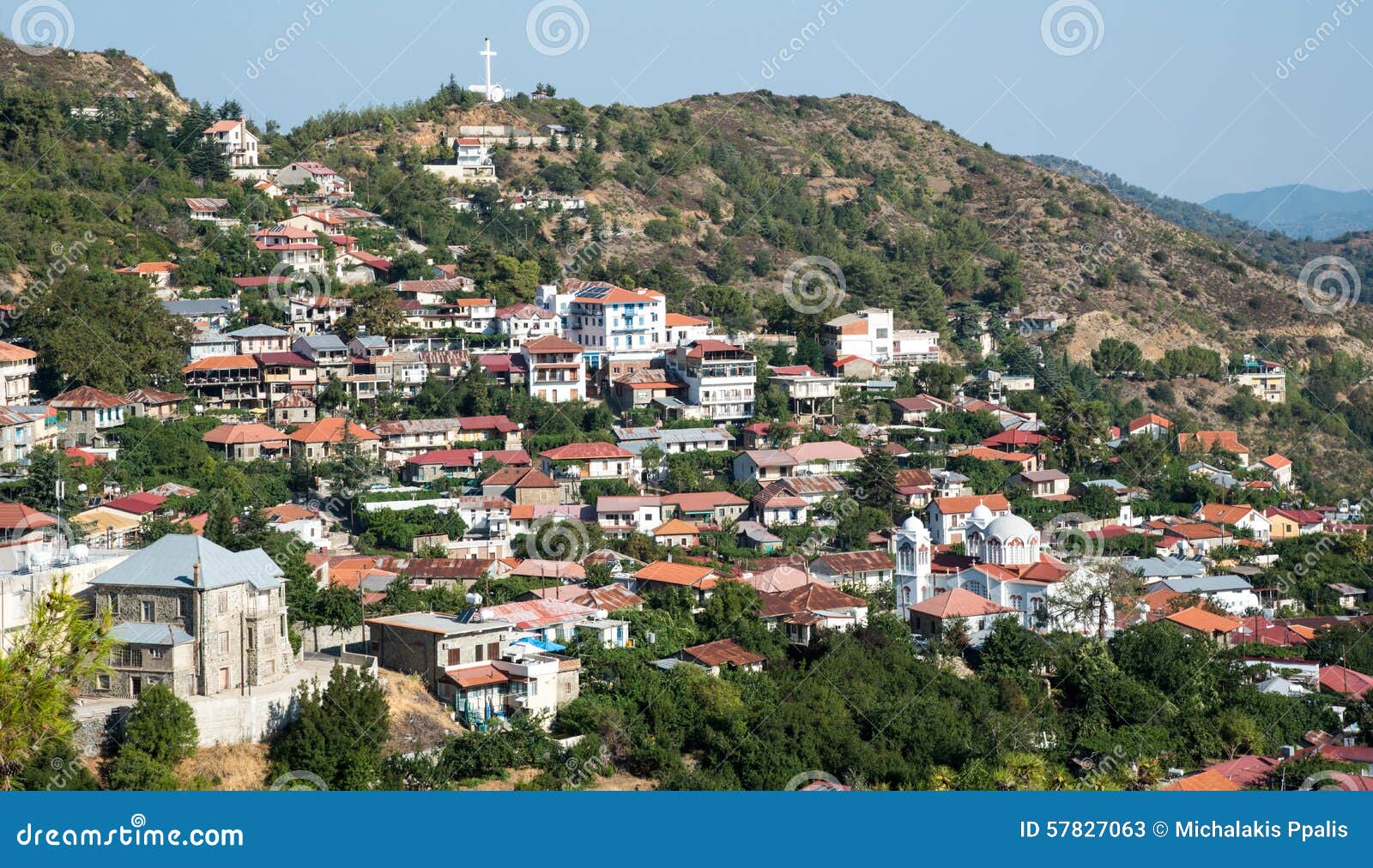
The main complaint was that it was too steep. This is true - you would need to do a lot of climbing if you were in on lower ring and needed to do business with an upper one. It's steep but you can find people living on steep mountains all over the world. The mediteranean has several villages that wold require a lot of climbing. This on on the Isle of Cyprus is much higher than Minas Tirith.


There is the same complaint about the lack of a portcullis. In this case, Tolkien gave a detained description of the gate. The reason that gates are attacked is because they are a weak spot. A portcullis is added to strengthen the gate. But the great gate at Minas Tirith was a wonder all by itself. Instead of being wood bound with iron, they were iron and steel. You couldn't just send some people with axes to chop through it. It took a custom-made battering ram, 100 feet long to burst the great gate. A portcullis wouldn't have lasted a second against Grond.

In the book, the great gate was breached then the army of Mordor drew back a bit and the Witch King rode to the gate with his hood thrown back and a gold crown sitting on his invisible head. Gandolf rode out to meet him and the Witch King drew a flaming sword. But they were interrupted by the arrival of the Army of Gondor.

In the movie the orcs and trolls invaded the first level and the defenders pulled back to the next level before the Riders of Rohan arrived. The Extended Edition had a variation of Gandolf's meeting with the Witch King.

Regardless, even with the gate breached and the army of Mordor inside the first wall, it was still going to be difficult for them to advance further. The remaining six gates were smaller and staggered. The orcs and such would be bottled up in the streets with arrows and loose masonry raining down on them and no chance of bringing Grond or other siege equipment into the narrow streets. The battle would have devolved into a long siege with the orcs trying to undermine the walls or tunnel under and up. Assuming Gondor had enough food, the siege could have gone on for years. The impression of Rohan and the fleet brought by Aragorn saving Gondor at the last moment is false.

In fact, the only real complaint that can be made about Gondor was that it was too good.

Note - a few things were dropped from the book. Minas Tirith should have been surrounded by miles of farms and it took two days for all of the reinforcement to arrive before Mordor's army. Again, this is forgivable in a movie that was already very long.


To summarize, the fortifications as described by Tolkien and depicted in the movies compare very well with real life counterparts. A few liberties were taken so as not to slow the action but in general these were very good examples of the types of fortifications they were meant as. Anyone who spends 20 minutes trying to poke holes in them is just engaging in self-aggrandizement.


Tuesday, June 28, 2016

Dark Shadows

50 years ago Dark Shadows started it's run. I didn't watch it back then, of course. It wasn't aimed at 11 year old boys. It was a soap opera trying to take advantage of the 60s craze for Gothic romances. These were all the thing at the time. Every paperback shelf had a section of Gothic Romance novels. All of them had the same basic plot - a simplified version of Jane Eyre. The covers all had a young woman running with a castle or large house in the background. The plots were always about a young working woman, often a governess, coming into a new environment. There would be a mystery with some spooky overtones and the man she was interested in was always implicated. By the end she'd solve the mystery but be in danger and he'd save her and they'd fall in love.

Dark Shadows had all of those elements. But it wasn't enough. After a few months of sluggish ratings, they decided to change the show from suggesting the supernatural to embracing it. First they added some ghosts then a human phoenix. That went well enough that they decided to add a vampire. That's when they struck gold.

I started watching it after it changed time slots and was no longer running during school hours. My mother suggested it because "it was popular with the college kids".

When I started watching it, they were wrapping up one of the time travel plots and introducing a cult called the Leviathans. There were also Lovecraftian elements involving a creature who was s inhuman that the sight of him drove people insane. Barnabas had already been cured of being a vampire, Quentin of being a werewolf, Angelique had retired from witchcraft and Victoria Winters had left the show.

The Leviathans' creature started as a baby but grew up fast. His eventual human form was named Jeb Hawks. There were two other groups. One was headed by Barnabas and was trying to stop the Leviathans. The third group was the innocent bystanders. This group kept getting smaller. All the Leviathans had to do was show someone a magic box and they gained a convert.

I was rooting for Jeb and his group. He was younger and Caroline was in love with him. Caroline was pretty and had hair so perfect it looked like a special effect. Jeb couldn't be too bad if a hot chick like Caroline was with him (after seeing all of the episodes I discovered that the monsters always fell for Caroline).

I was following the show but not really hooked until Barnabas tried to steal the magic box. A bat was hidden in it. It bit him and transformed him into a vampire.

That's when I got hooked. Jonathan Frid's version of a vampire was, and still is, unique. More than anything, he reminded me of a drug addict. Except when he gave in, people died.

Eventually Jeb turned against the Leviathans but was destroyed himself.

Barnabas went into a parallel universe only to be chained in his coffin for weeks while Frid and the main cast filmed House of Dark Shadows. Eventually Barnabas was freed and returned to his own universe only to have a vision of the future in which the Collins family was destroyed. Returning to their own time, Barnabus and Dr. Julia Hoffman, his constant companion, tried to stop the destruction. They failed but got another chance when Julia traveled into the past. They finally succeeded and returned to find the Collins family alive and happy.

The final plot took place in the past and in the parallel dimension. For the only time in the show's run, Frid played a different character - Bramwell, Barnabas's son. By then the show was running out of ideas and ratings had dropped.

In the late 1970s some of the episodes were run late at night.

In the mid-1980s, the show was resurrected on PBS and shown in its entirety. I watched it religiously and finally saw all of the parts I missed.

In addition to its TV run, Dark Shadows spun off two low-budget movies with the original cast, a revival in the early 1990s and a high-budget movie in the 2000s.

I credit most of the show's success to Jonathan Frid. Frid was an excellent actor but he admitted that he was slow to learn his lines and he was a constant presence in the show. His performances were always tinged with some panic that he'd mess up a line (he often stumbled over his lines). Since Barnabas was always hiding something, his added an edge to his character. At the same time, Frid was excellent at being the tragic hero, trying to make up for his personal failings by helping others. The rest of the cast was also strong and the writing, while corny, was engaging. And it was unique among soap operas that you had to keep watching it because periodically everything changed.

Monday, March 14, 2016

Plot holes that aren't

Fans love to pick holes in plots. "Why didn't they do this?" they ask. Here are two perceived plot holes that don't actually exist.

Lord of the Rings - Why didn't the fly on the eagles to Mount Doom?

The eagles kept showing up and saving the day. So why not use them to bypass most of the plot and go directly from Rivendale to Mount Doom?

First, there is a difference between the book and the movies. In the book, Gandolf had no way of calling the eagles. They had to notice you, usually because they were investigating unusual events like big battles or fires or because you were in a high place long enough for them to pass by. Keeping in mind that the Ring-bearer was trying to keep a low profile, none of that worked. In fact, the sorts of things that attracted the eagles were likely to attract hostile notice first.

Tolkien had no problem leaving Gandolf on top of Orthanc until the eagles noticed him but it wasn't dramatic enough a rescue for a movie. Accordingly, Gandolf was able to capture a moth and send it to the eagles for help. So he did have a way to summon the eagles to carry the ring-bearer. Was it a good idea?

Consider that the ring wraiths were mounted on flying creatures. It was clearly stated that some birds acted as eyes for Sauron and Sauruman. Also, in the book, Sauron was using the silmaril from Minas Morgul to see the outside world. In the movie he was a giant eye, able to see great distances. So the odds of being able to slip into Mordor by air and remain unseen were poor. Once spotted, the eagles would be at a huge disadvantage against flying ring wraiths armed with poisoned arrows to say nothing of their mounts.

Taking the eagles would have been easier but much riskier. No plot hole here.

The Little Mermaid - Why didn't she write Eric a note?

 The Sea Witch took away Ariel's voice and gave her three days to make Erin call in love with her. She could have sped the whole process up if she'd written him a note saying "I'm the woman who saved you and whose voice enchanted you."

Except, this is the same Ariel who didn't know what a fork was, She's supposed to know how to use pen and paper (neither exists underwater)? And, assuming she does know how to write, why would she use an alphabet Eric understands?

Yes, Ariel did sign an agreement. That proves that she can sign her name or make her mark using a magic stylus and scroll. Eric had neither.

And yes, we saw her sign her name. That's not as conclusive as you might think. Illiterate people make their mark. This is usually some pictogram that is meaningful to them and known as their mark. As a princess, Ariel would have had such a mark and used it for contracts and such. We saw that as her name for the same reason that Belle's French village spoke English - so the audience would know what's going on. Don't use dramatic license to prove a plot hole.

Finally, even if Ariel had managed to write a note to Eric, would he have believed her? He had fallen in love with a voice and here's someone with no voice at all claiming to be the person he loves. Eric would have good cause to be skeptical. And even if he believed her, would he love her or just pity her for losing the thing he loved?

That's a pretty weak plot hole. You might as well ask why she didn't text him? 

Thursday, February 05, 2015

The WikiGnome's Futile Struggle

Bryan Henderson, working under the name Giraffedata holds the record for editing the most articles in Wikipedia. Unlike most editors, he only edits one thing. He is fighting the use of the words "comprised of". He has corrected this over 47,000 times! He has also written a long screed explaining why this usage should not be allowed. This boils down to the complaint that it is non-standard usage and recommended against by style manuals. He is basically fighting a rear-guard action against the way that language evolves. This can be seen in the Free Dictionary:

The traditional rule states that the whole comprises the parts and the parts compose the whole. In strict usage: The Union comprises 50 states. Fifty states compose (or make up) the Union. Even though careful writers often maintain this distinction, comprise is increasingly used in place of compose, especially in the passive: The Union is comprised of 50 states. Our surveys show that opposition to this usage is abating. In the 1960s, 53 percent of the Usage Panel found this usage unacceptable; in 1996, only 35 percent objected. 

Clearly, Henderson is fighting a losing battle. English, like all living languages, changes over time. Words acquire new meanings or shift in how they are used. There is a great example of this given by 15th century writer, William Caxton. He was often criticized for not using "homely" words. In discussing the problems with choosing the proper words for a translation he told of some northern merchants who went to get some food on the Kentish side of the Thames: 

And specyally he axyed after eggys. And the good wyf answerde that she coude speke no frenshe. And the marchaunt was angry for he also coude speke no frenshe but wold haue hadde egges and she vnderstode hym not. And thenne at laste a nother sayd that he wolde haue eyren. Then the good wyf sayd that she vnderstood hym wel

 For those who don't read Middle English, the merchant asked for eggs but the goodwife said that she couldn't speak French. The merchant said that he couldn't speak French either but that he wanted eggs. Someone else pointed out that the local word was "eyren" which the goodwife understood.

One can imagine a 15th century of Henderson tut-tutting anyone using "egg".
 
In a living language, words usage shifts constantly. The only real guide is how a word or phrase is currently being used. Style guides usually represent the training edge of acceptable usage.

Henderson inadvertently is providing ammunition that "comprised of" is now standard usage. He has documented 47,000 uses of it within a single source. That means that around 1% of Wikipedia entries have used it. That's a fairly high percentage, especially given that Wikipedia entries are made by people with a higher education than the background population.